
Climate
Five-Year Climate Research Effort Reshapes Climate Modeling, Expands Information Access
Jul 14, 2026
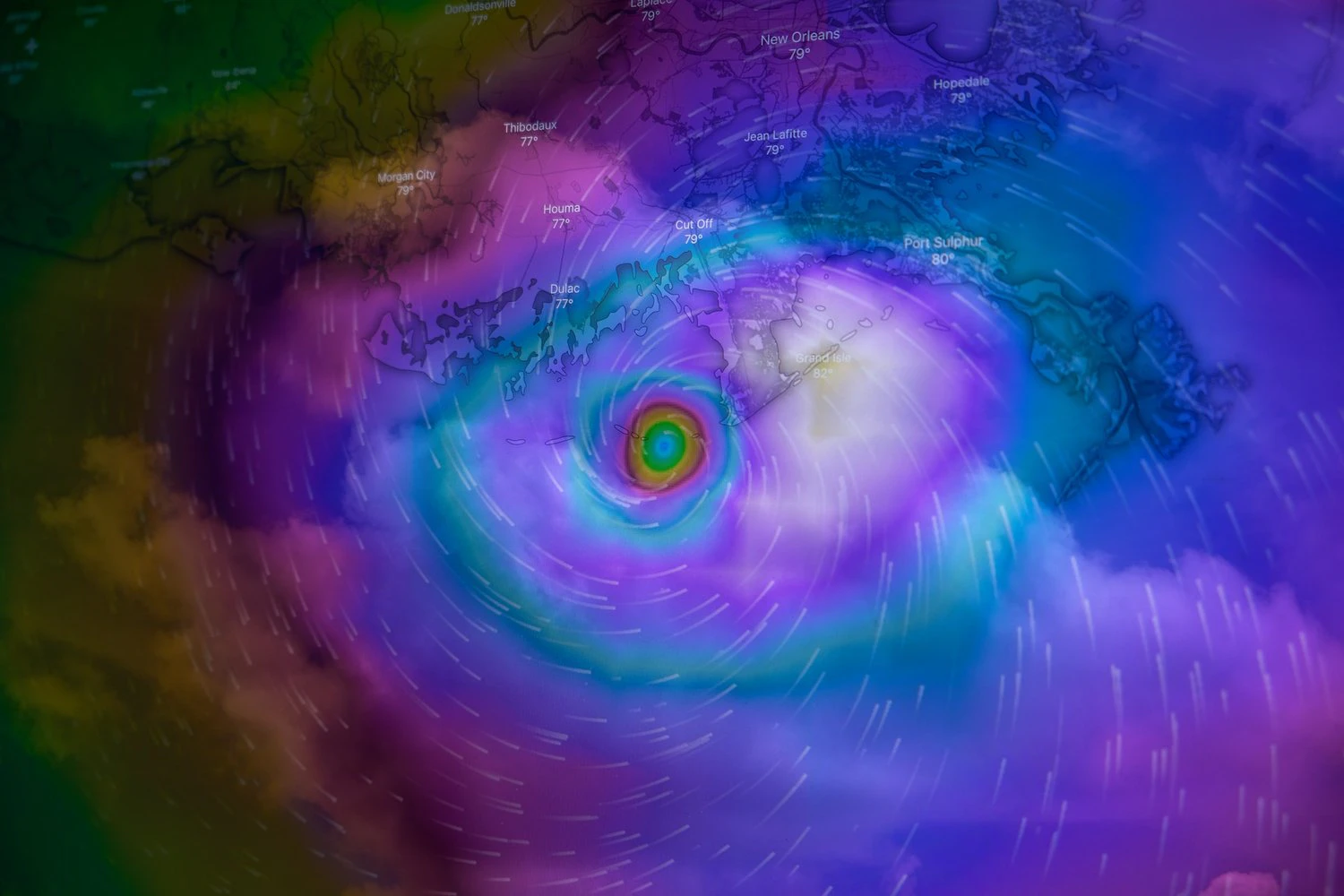
Five years of Virtual Earth Systems Research Institute -supported research has reached more than 305,000 users in 169 countries; Schmidt Sciences opens new funding round
Media Contact: Carlie Wiener, [email protected]
NEW YORK — Nine teams have reshaped the modeling and increased the understanding of climate systems while expanding access to those models for decisionmakers worldwide, thanks to five years of support from Schmidt Sciences’ Virtual Earth Systems Research Institute (VESRI). Through VESRI projects, climate simulations that once required thousands of computing processors now run on just a handful of GPUs nearly half the time. And one ocean emulator that captures crucial ocean dynamics now runs nearly 150 times faster than its predecessor.
Research by CALIPSO, one of nine founding VESRI projects, fed into a new version of the Global Fire Emissions Database (GFED5), and found that fire contributes roughly 60% more carbon to the atmosphere than previous estimates reflected—a correction that ripples through carbon budget and emissions pathway used in planning.
BC3 integrated fast climate emulators, hardware and software that makes one computer system act like another, into En-ROADS, a policy simulator that has now been used by hundreds of thousands of people across more than 100 countries. Other founding VESRI projects incorporated brittle sea-ice physics into climate models, showed that stratospheric gravity waves (ripples in the atmospheric air) have a bigger effect on wind and weather than previously believed, and improved scientific understanding of climate extremes.
Building on these results, Schmidt Sciences will open expressions of interest for the new round of funding called the VESRI Climate Modeling Challenge, inviting researchers to submit applications through Sept. 11.
Earth systems models are the scientific backbone of climate projections and the tools policymakers, urban planners, and disaster-preparedness officials rely on to make decisions for their communities. For decades, those models have shared the same critical weaknesses: computing demands that limit who can run them, blind spots where clouds form and carbon burns, and a gap in making the science accessible to decision-makers.
“VESRI was founded on the belief that coordinated, team-based science could move faster and further than fragmented individual efforts. More than five years in, we’ve seen that belief prove true, and the new VESRI Climate Modeling Challenge reflects our commitment to pushing the frontier further.” – V. Balaji, Climate Center Lead at Schmidt Sciences
When VESRI launched in 2020, the goal was simple but ambitious: bring the right researchers together, break down the silos that slow science down, and tackle some of climate modeling’s hardest problems. The program now spans nine research projects, across 17 countries, at 65 institutions.
Key Impacts
Fire and Carbon: A Significant Correction
Philippe Ciais and the CALIPSO project set out to model what he calls “the most unifying and important blind spot” in climate science: how carbon is lost from plants, soils and oceans. By reconstructing a global burned-area record stretching back more than a century, the team found that fire has been contributing roughly 60% more carbon to the atmosphere than previous estimates reflected. A separate investigation in northern Siberia revealed that roughly a third of fires there burn peatlands, which have dried out in hotter summers and in some cases smolder through winter, a carbon source not accounted for in most models.
Faster, More Accurate Ocean Modeling
Current climate models divide Earth into grid boxes typically 25 kilometers across, leaving anything smaller like cloud formation, turbulence, radiation, or ocean mixing unresolved. Climate physicist Laure Zanna and the M²LInES project used machine learning to capture those missing processes and embed them in existing models, producing a 30 to 50% reduction in North Atlantic sea-surface-temperature bias. The team also built Samudra, an ocean emulator that runs roughly 400 times faster than the model it was trained on.
Putting Science in the Hands of Decision-Makers
The MIT-led BC3 project integrated fast climate emulators into En-ROADS, a climate solutions simulator, now reaching more than 305,000 users across 169 countries who utilize it to explore regional consequences of emissions choices such as heat, flooding, air quality, and storm risk in their regions.
Learn more about VESRI’s nine initial projects.