AI & Advanced Computing
Schmidt Sciences awards $10 million to one of the world’s largest AI and humanities research programs
Oct 14, 2026
Nineteen teams will use AI to expand the study of art, dance, history, music, literature and more across thousands of years of global culture.
Contact: Carlie Wiener – [email protected]
NEW YORK— Using AI to reconstruct a marble map of Rome that shattered in 226 AD. Analyzing sperm whale calls for evidence of vowels and regional accents. Drawing on ancient records to understand why some societies endured climate stress while others faced famine. These are among the 19 projects that will receive $10 million from Schmidt Sciences to bring artificial intelligence to bear on some of the humanities’ most stubborn puzzles and help researchers develop and test new AI capabilities while making their work open source. Teams will openly share the tools and resources they develop, including code, model weights and benchmark datasets.
The projects, conducted by global interdisciplinary teams, are the latest grants from Schmidt Sciences’ Humanities and AI Virtual Institute, which brings together researchers from AI and the humanities to advance both fields. The work spans studies of archaeology, ancient languages, the history of science, global-scale shifts in knowledge, and the making of art, music and performance over time.
An expert advisory board selected this year’s awardees from 501 proposals spanning 42 countries, bringing HAVI’s total funding commitment in the last two years to more than $21 million.
“At a time when AI is reshaping how we learn and understand the world, we have a responsibility to put human knowledge at the heart of its development,” said Wendy Schmidt, co-founder of Schmidt Sciences. “Our Humanities and AI Virtual Institute grantees are bringing that commitment to life using AI to recover overlooked histories, explore cultural heritage and deepen our understanding of human expression. Their work will ensure that AI’s progress is measured by what it makes possible for people with greater understanding and better ways to tell our stories.”
The program has already supported projects that would have been difficult to imagine a decade ago, including:
- an AI reconstruction of Delacroix murals destroyed by fire in 1871;
- an open tool that helps small museums digitally restore deteriorating artifacts using smartphone photos; and
- systems that make Black digital archives overlooked by traditional collections easier to discover.
The funded projects include:
(Al-)Chemical Space In Silico (AXIS)
Led by: Guillermo Restrepo, (Max Planck Institute for Mathematics in the Sciences/Bielefeld University), Sarah Lang (Max Planck Institute for the History of Science)
This project will dramatically expand the scope of the history of chemistry before 1800 by training AI to rebuild and translate alchemical recipe collections—often called “books of secrets”—with wet-lab validation of particularly significant reactions.
An Agentic Implementation of the Comparative Method
Led by: David Mortensen (Carnegie Mellon University), Carolyn Rosé (Carnegie Mellon University)
This project hopes to deliver open-source software that automatically reconstructs proto-languages across Romance, Uralic, Sinitic, and Austronesian language families, enabling researchers to test hypotheses about patterns of sound change, trace population movements and cultural contact across prehistory, and uncover aspects of human history that no written record preserves.
CuneiAI: An AI-Powered Framework for Language, Dialect, and Genre Analysis
Led by: Marcos Zampieri (George Mason University), Tommi Jauhiainen (University of Helsinki)
This project seeks to process and analyze hundreds of thousands of tablets painstakingly composed in cuneiform script, a writing system of syllabic signs made of wedges, used to represent many different Near Eastern languages and to create some of the world’s first legal codes, literature, mathematics and diplomacy.
Deciphering the Babylonian Astronomical Diaries with Science-Informed AI
Led by: Aaron Schein (University of Chicago)
This project seeks to create a database of every astronomical observation in the Babylonian Astronomical Diaries, the longest-running scientific data collection project in human history, which encodes not only celestial data but also weather, commodity prices and historical events over six centuries.
Deep Learning for Jibo Extraction from Classical Japanese Manuscripts
Led by: Paul Atkins (University of Washington), Tomo Miyazaki (Tohoku University)
This project proposes to teach AI how to read ancient handwriting—-namely the Chinese-character-influenced Japanese script called Jibo, where each writer’s style is as distinctive as a fingerprint—so scholars can study the hundreds of thousands of texts in this canon.
Fragmented Legacy: Turning Broken 3D Material Evidence into Testable Archaeological Hypotheses
Led by: Chen Feng (New York University), Jing Zhang (NYU), Radu Iovita (NYU), Raiko Krauß (University of Tübingen), Scott Williams (NYU)
This project will train AI to both assemble and generate three-dimensional renderings of Neolithic archaeological objects—ceramic, bones, eggshells and more—to help researchers study the lives and habits of humans from 12,000 years ago. This project will tackle a difficult and longstanding problem for archaeology: “refitting” – reassembling fragments back into the original object.
Great Marble Map of Rome
Led by: Elizabeth Thill (Indiana University Indianapolis), Dan Johnson (Indiana University Indianapolis), Jason M. Kelly (Indiana University Indianapolis).
This project will use AI to assist in the reconstruction of a famed ancient map, the Forma Urbis Romae, made of marble and as big as a house, that was largely destroyed and exists today in roughly 1,200 pieces. The team plans to extract a significant amount of data from a scan of each fragment, including luminescence signatures, geometry, carving directions, and tool marks and develop new AI-driven techniques to fit pieces together.
Hidden Paintings, Layered Histories: Reframing X-Ray Analysis
Led by: Aggelos Katsaggelos (Northwestern University), Maria Kokkori (Northwestern University), Giovanni Verri (The Art Institute of Chicago), Gloria Groom (The Art Institute of Chicago), Kim Muir (The Art Institute of Chicago)
In partnership with the Art Institute of Chicago and the Van Gogh Museum in Amsterdam, this project seeks to augment image-based analysis of paintings with physics-based X-ray reconstruction, with plans to create open-source tools and stage an exhibition at the Art Institute.
Humanitext: A Human-AI Co-Creation Platform for Verified Classical Scholarship
Led by: Naoya Iwata (Nagoya University and National Institute of Informatics), Ikko Tanaka (J.F. Oberlin University), Jun Ogawa (University of Tokyo), Ikki Ohmukai (University of Tokyo), Hiroki Uematsu (National Institute of Informatics).
This project will create an AI-driven system that can allow scholars and students to easily and swiftly trace Classical ideas, quotations and paraphrases across time, texts and languages.
Latinitas: Three Millennia of Latin for All
Led by: Anna Dolganov (Austrian Academy of Sciences), Martin Korenjak (University of Innsbruck), David Smith (Northeastern University), Dimitris Vlitas (SAIL Reply / Mistral AI)
The Latinitas project aims to enable scholars across disciplines to search, analyze and reconstruct fragmented Latin texts—many never translated or studied—spanning three millennia.
Modeling Famine Resilience: Multimodal AI for Climate–Society Dynamics
Led by: Timothy Harrison, (University of Chicago), Sturt Manning (Cornell University), Daniel Lawrence (Durham University), Birali Runesha (University of Chicago), Lynn Welton (University of Toronto), Chenhao Tan (University of Chicago)
Co-funded with Schmidt Sciences’ Climate Center, this project will use AI to answer essential questions for our time: when and why does climate stress tip into famine and civilizational crisis, and how do societies move away from catastrophe and toward adaptation?
Motifs Across Media: AI Analysis of Prehispanic Atacama Visual Systems
Led by: Francisca Gil-Ureta (National Center for Artificial Intelligence, Chile/CENIA), Ana M. Cabanas Plana (University of Tarapacá), Iván Sipiran (University of Chile / CENIA), Adrián Oyaneder (University of Tarapacá), Ester Echenique (University of Tarapacá), Daniela Valenzuela (University of Tarapacá), Víctor Méndez Muñoz (Pontifical Catholic University of Chile)
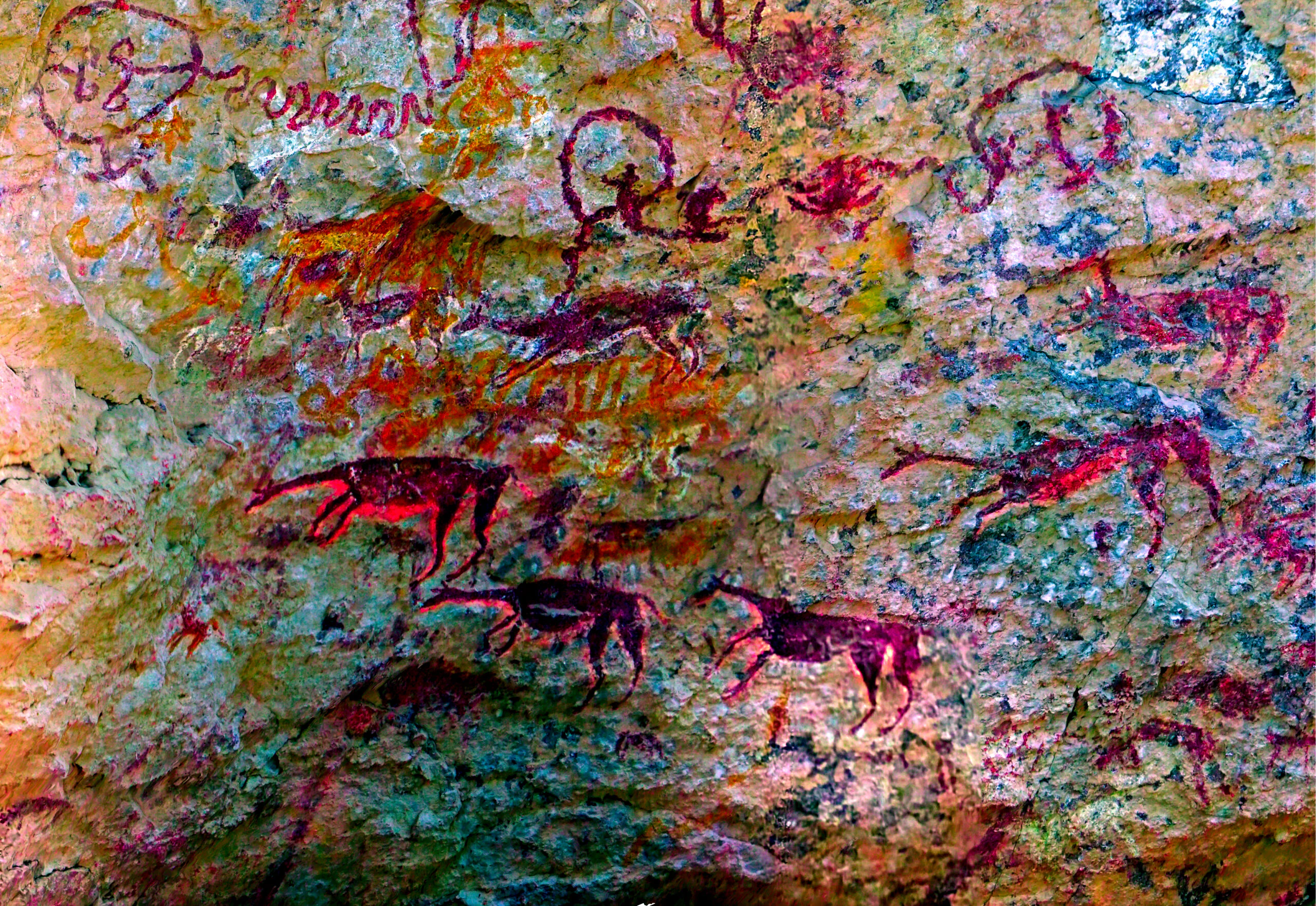
This project aims to enable scholars of Indigenous communities of Chile’s Atacama desert to analyze visual elements—humans, animals, geometric shapes—in ceramics, rock art and land art created by numerous communities across 400 years.
The Movement Language Model: Culturally-Conditioned AI for Embodied Cultural Heritage
Led by: Sinclair Ogaga Emoghene (University of Texas at Austin), Lillian Chin (University of Texas at Austin)
This project aims to create a large language model for dance by translating small movements into tokens, or kinemes, that carry the geographic and cultural context of the motion’s origin, using up to 500 recordings from 40 countries.
Rethinking Language: AI, Animals, and the Boundaries of Communication
Led by: Gašper Beguš (UC Berkeley), Nina Beguš (UC Berkeley)
This project will test what properties of human language—sound change, dialect, and more—appear in the communication of sperm whales, orcas and parrots, laying the groundwork for reconceptualizing language as an evolutionary information technology applicable across human, animal, and machine communication.
Scaling Archaeological Vision
Led by: Steven Wernke (Vanderbilt University), Parker VanValkenburgh (Brown University), Yuankai Huo (Vanderbilt University)
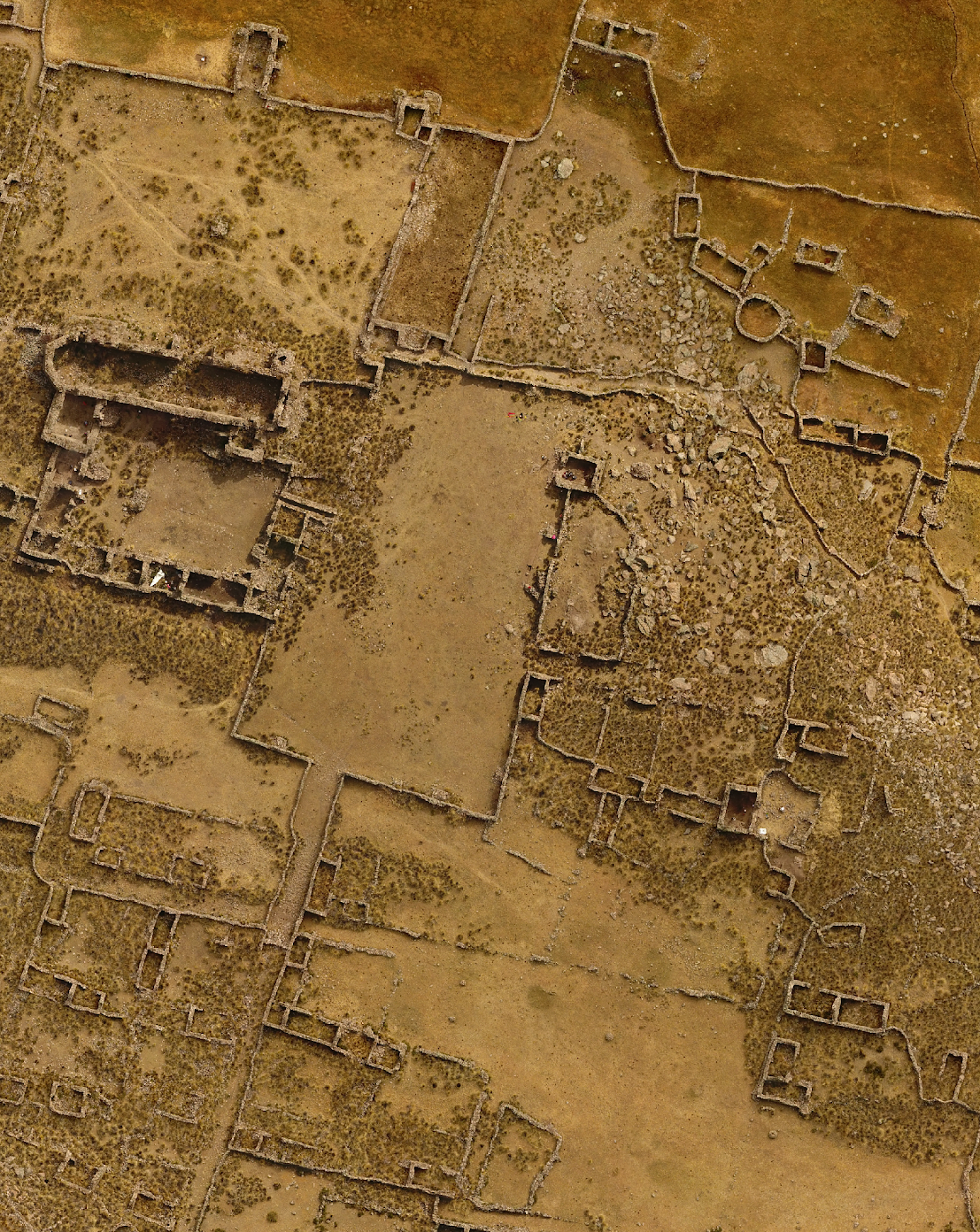
This project aims to help archeologists better understand three successive Andean empires through a full record of imperial architecture across 2 million square kilometers, an area three times the size of Texas. The team hopes to learn how expert knowledge can fine-tune a ViT (Vision Transformer) foundation model for reliable detection of archaeological features from satellite images at continental scale.
Strokes of Sonic Tradition
Led by: Hao-Wen Dong (University of Michigan), David Sears (University of Michigan), Eduardo Veas (Graz University of Technology), Ming Tak Ted Hui (University of Oxford), Nathan Martin (University of Michigan), Joseph Lam (University of Michigan)
This project seeks to unlock one of the largest yet least studied bodies of musical canon—more than 30,000 surviving compositions for the guqin, a seven-string zither popular among Chinese literati from the Song through Qing dynasties. They plan to develop a stroke-based OMR (Optical Music Recognition) AI model to read ancient jianzipu notation and develop an encoding schema and an AI pipeline for retrieving extra-notational musical parameters from the guqin corpus to enable widespread study of this important music.
Toward a Multimodal Understanding of 250 Years of U.S. Government Documents
Led by: Benjamin Charles Germain Lee (University of Washington), Melanie Walsh (University of Washington), Kyle Deeds (Boston University), Trevor Owens (American Institute of Physics)
This project seeks to create AI capable of extracting images and paired text from over 100 million pages of U.S. federal government documents held within the End of Term Web Archive, opening up significant new avenues for scholarship.
Tracing the Signs: Multimodal Foundation Models for Ancient Writing
Led by: James D. Moore (Ohio State University), Letizia Cerqueglini (Tel Aviv University), Shai Gordin (Ariel University), Ethan Fetaya (Bar-Ilan University), Morris Alper (University of Miami)
This project will explore how literacy developed and spread in the ancient Near East by creating multimodal AI models that can work across two significant but largely inaccessible ancient writing traditions: cuneiform tablets and safaitic rock inscriptions.
About Schmidt Sciences
Schmidt Sciences is a nonprofit organization founded in 2024 by Eric and Wendy Schmidt that works to accelerate scientific knowledge and breakthroughs with the most promising, advanced tools to support a thriving planet. The organization prioritizes research in areas poised for impact including AI and advanced computing, astrophysics, biosciences, climate, and space—as well as supporting researchers in a variety of disciplines through its science systems program.