AI & Advanced Computing
Schmidt Sciences awards $11M in grants to bring AI to humanities research
Dec 11, 2025
Contact: Carlie Wiener; [email protected]
NEW YORK—Schmidt Sciences has awarded $11 million for up to 23 teams of researchers around the world to develop and apply artificial intelligence to archaeology, history, literature and other humanities disciplines, seeking to unlock new understandings of human history and culture, the organization announced today.
“Our newest technologies may shed light on our oldest truths, on all that makes us human—from the origins of civilization to the peaks of philosophical thought to contemporary art and film,” said Wendy Schmidt, co-founder of Schmidt Sciences. “Schmidt Sciences’ Humanities and AI Virtual Institute (HAVI) is poised to change not only the course of scholarship, but also the way we see ourselves and our role in the world.”
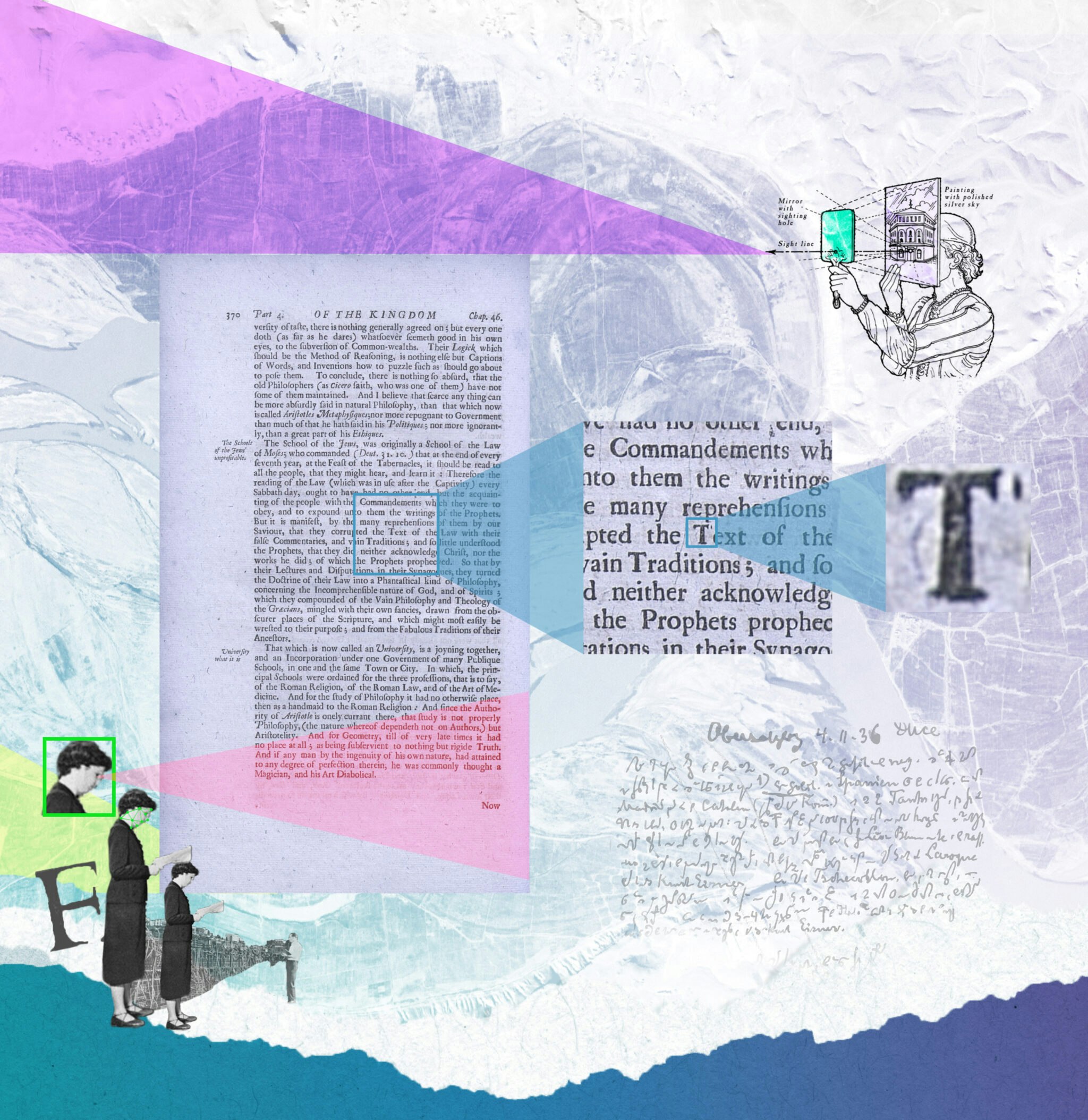
Humanities scholars have a hard time using AI models because those models are trained on massive amounts of contemporary data, modern languages, and two-dimensional media, whereas humanities research often involves ancient or lesser-spoken languages, three-dimensional artifacts, art made from a variety of materials, and relatively small amounts of ambiguous and culture-specific information. The Schmidt Sciences’s HAVI program will support researchers to create new AI models or evolve existing ones to open new avenues for historical understanding and inquiry.
Researchers will, for example, create AI models that can answer questions from the perspective of a particular historical place and time, analyze how camera movement and soundtracks shape narrative in film, explore how changes in trade routes or technology affect art and literature, search for new, buried archaeological sites and even virtually unwind ancient scrolls or read illegible, torn, shorthand manuscripts. Their work will range across geographies and millennia, from industrial England to Qing-era China to ancient Egypt.
“Rather than destroying the humanities, as many have feared, AI has a role in advancing the humanities, opening new avenues of scholarship,” said Brent Seales, a University of Kentucky professor who leads HAVI. “Computational methods have been a part of the study of humanities for decades, and it’s time to explore how to integrate AI into this essential scholarship.”
The teams were selected after multiple rounds of review by Schmidt Sciences and external experts. They join two inaugural awards from HAVI granted earlier this year—one to the Sorbonne University in Paris to study the artworks of Eugene Delacroix and a second to EduceLab, a first-of-its-kind, next-gen heritage science user facility that applies AI, micro-CT imaging, and other high-tech instrumentation to the study of cultural heritage artifacts.
Today, Schmidt Sciences is also announcing the next round of this program, with an application due date of March 13, 2026.
Learn more about the winners here.
The research projects are:
Seeing Through Style: Multimodal Advances for Iconographic Analysis
Led by: Carolyn Anderson, Wellesley College
Richly decorated and detailed medieval manuscripts present a challenge for large language models to analyze due to their scale, granularity and intermixing of style and content. This team will train models to overcome these challenges to analyze manuscripts and advance art historical research.
Text Machine: Computing Literary Innovation
Led by: Ruth Ahnert, Queen Mary University of London
After training smaller language models with literary texts and timestamped metadata from specific historical or cultural contexts, the team will trace when an AI model is “surprised” in relation to periods of dramatic technological change.
Envisioning Print with AI Computer Vision
Led by: Guyda Armstrong, University of Manchester
The team will develop AI tools that can understand the differences between multiple versions of prints throughout history, allowing scholars to understand how early imagery was made and circulated along with the practices of printers and their workshops.
Bridging Large-Scale Computational Analysis and the Close Viewing of Film and Television
Led by: David Bamman, UC Berkeley
Because today’s AI models can analyze a two-dimensional image but not how or why it was filmed in a particular way, the team will combine large-scale computational analysis in AI with humanistic scholarship in film and television to focus on four case studies—measuring the close-up, classifying camera movement (dolly shots, crane shots), disentangling storylines, and exploring the relationship between visual and aural timing in television. These findings will be integrated into Kinolab, a digital humanities laboratory dedicated to the analysis of moving images with a focus on narrative film and media, so that film scholars can more easily explore and engage with them.
Connectivity and Individuality in Textual Traditions: Augmenting Retrieval for Eurasian Languages
Led by: Peter Bol, Harvard University
The team will train multilingual AI models to study Asian-language manuscripts, including those from low-resources languages like Tibetan. This will reduce overreliance on a small number of well-known translations and increase understanding and decrease bias in historical economic and political research.
Discovering Global Archaeological Heritage using AI and Remote Sensing
Led by: Jesse Casana, Dartmouth University
The team will create a suite of open-access tools for AI archaeology, using vast data stores of satellite imagery and aerial photography to find historic roadways, field systems, burial grounds and more, offering potentially transformative perspectives on human history.
Communities in the Loop: AI for Cultures & Contexts in Multimodal Archives
Led by: Jim Casey, UC Santa Barbara
The team will create a searchable database of Black newspapers and develop AI-based methods for searching text and images to identify the veiled protest and other political messaging used, at great personal risk, by American Black intellectuals in the 19th century.
Playing Heaven: Remapping Early Modern Neo-Confucian Worlds with AI
Led by: Javier Cha, University of Hong Kong
The team will create DeepPast, an AI research assistant, to dig through digital archives for clusters of data that could lead to new insights, focusing on low-resource language texts from early modern East Asian history.
SETS: A Set-Based Architecture for Knowledge Structures
Led by: Giovanna Ceserani, Stanford University
Current LLMs that rely on predicting the likeliest next word are ill-equipped to examine “deep sources” such as archival documents with layers of meaning, graphical marks, distinct visual layouts and other considerations. The team will create a new AI architecture that more accurately reflects the way humans read, using as a case study materials from under-resourced languages across pre-modern Europe, Western Asia and Africa.
Beyond Translation: Opening up the Human Record
Led by: Gregory Crane, Tufts University
The team will use generative AI for multidimensional language translation—mapping the influence of texts, their translations, and resultant commentary and scholarship across millennia in a range of languages, building on the Perseus Digital Repository for the study of Ancient Greek.
AI Models with Reinforcement Learning to Edit Text in Damaged Manuscripts
Led by: Paul Dilley, University of Iowa
The team will build custom software to decipher historic documents that are illegible to the human eye—due to fading, tearing or other damage—and ultimately enable scholars to easily study full texts of previously inaccessible pieces of history.
Archival Intelligence: Rescuing New Orleans’ Endangered Cultural Legacy
Led by: Katherine Elkins, Kenyon College
The team will develop a technique to prevent the “cultural flattening” that can occur when AI models examine multicultural and multimodal historical data – and use it to explore the emergence of jazz in New Orleans via data including fragile newspaper, sheet music, letters, recordings and more.
From Molecules to Masterpieces: AI-Powered Insights into Cultural Heritage
Led by: Shira Faigenbaum Golovin, Duke University
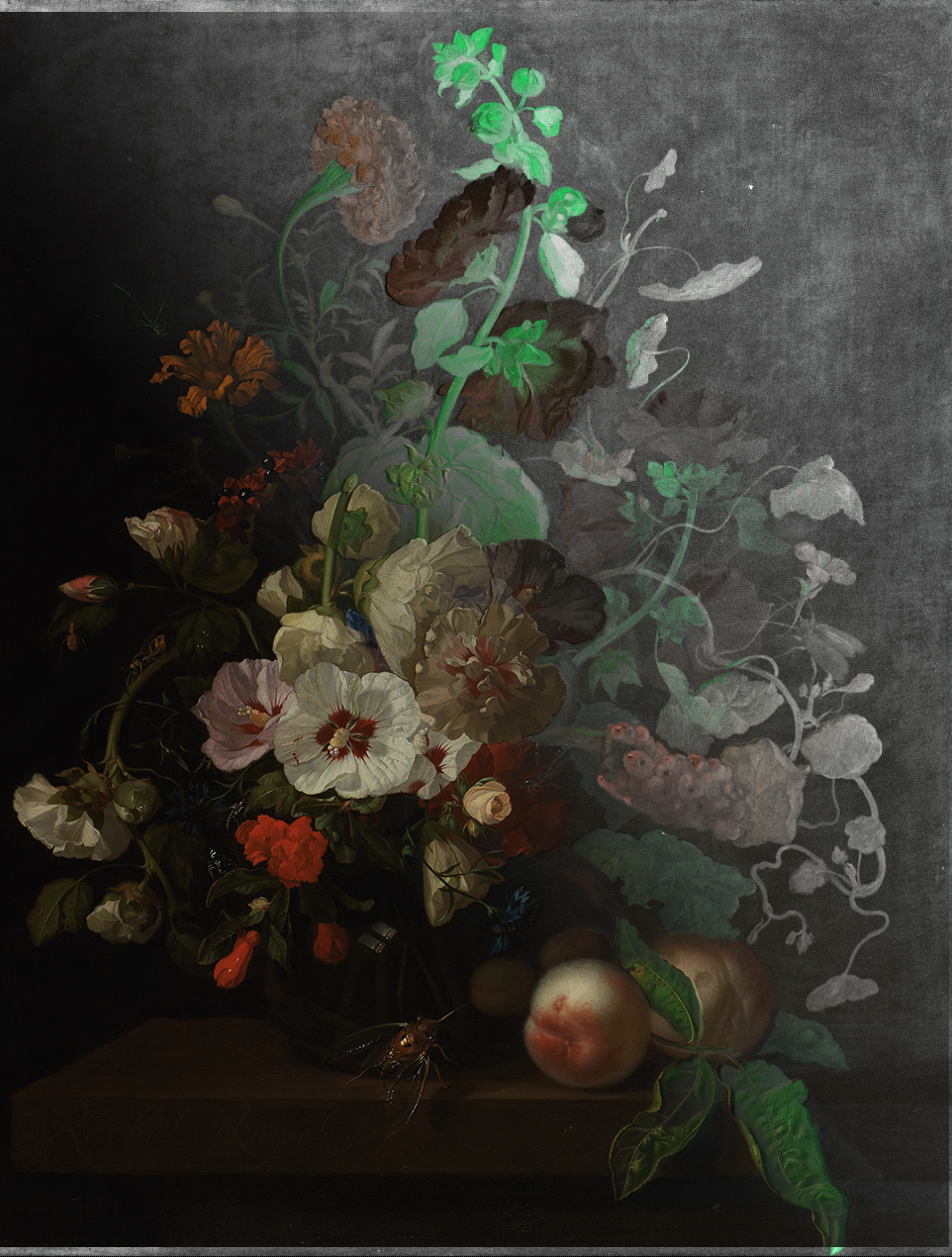
Inspired by the finding that Vincent Van Gogh’s classic painting of irises was purple, and faded to blue, this team will use AI analysis and imaging techniques to explore how artworks are made and how history can degrade them, ultimately building a predictive framework that can “rewind time.”
Medieval Judicial Opinions: Access and Analysis with AI
Led by: Abigail Firey, University of Kentucky
The team will build a multilingual chatbot that lets scholars explore historic views on morality and justice through 4th and 5th century papal writings—documents that exist in multiple handwritten copies with many discrepancies, all in an arcane version of Latin.
AI for Understanding the Law and its Evolution
Led by: Peter Henderson, Princeton University
From centuries of case law to administrative codes to statutes, this team will create a database of multilingual, multimodal legal text and an AI tool that can scan them to detect how legal ideas spark, spread, and change.
MakingAI: AI-Driven Integration of ‘Messy’ Data in Technical Art History
Led by: Erma Hermens, Cambridge University
The team will help art historians detect large-scale artistic trends across time and medium—such as how trade route changes affected art media across geographies—using AI that can examine material properties of specific objects along with images, text, and more.
Musica Subtilior—Interpreting and Sounding Graphic Music Scores
Led by: Annie Hui-Hsin Hsieh, Carnegie Mellon University
Because current AI systems cannot understand the multiple ways music can be expressed—for example, through notation, lyrics, and audio—this team will create a large dataset of music and build a new music translation model to catalyze advances in musical AI tools.
Decoding the History of Science with Contextual Image Understanding
Led by: Abigail Jacobs, University of Michigan
Combing through thousands of scientific images—hand-drawn line graphs, old photographs, typewritten tables, and more—this team will use AI to help scholars understand the history and evolution of science.
An ML Toolkit to Find Hierarchical Structure in Multimodal and Multilingual Data
Led by: Tom Lippincott, Johns Hopkins University
The team will produce a Python library for humanities scholars to study structures and patterns within large-scale oeuvres of poetry, music, text and other material.
Meeting the Vesuvius Challenge
Led by: Tobias Reinhardt, University of Oxford
Using non-invasive imaging, the team will pursue the “virtual unrolling” of papyrus scrolls, extracting and investigating complex three-dimensional surfaces without damaging or even opening the artifacts, to expand knowledge of the Epicurean School, Hellenistic thinking on free will and the history of logic.
Print & Probability: Using AI to Identify Printers of Clandestine Letterpress Books
Led by: Christopher Warren, Carnegie Mellon University
Centuries ago, publishers of controversial books often hid their identity, leaving scholars unable to connect the dots in vital discourse about freedom of the press and other rights. This team will release open-source datasets and AI models that can sift through texts and name printers who have eluded scholarship for 400 years.
Artificial Intelligence for Cultural and Historical Reasoning
Led by: Matthew Wilkens, Cornell University
The team will create and develop benchmarks for AI models that can faithfully reflect distinct cultural contexts and historical periods. They will use them to study cultural and intellectual change, enabling experimental approaches to historical questions where only observational evidence has been available.
Decoding the Lost Art of Shorthand
Led by: Nikolaus Weichselbaumer, Johannes Gutenberg-Universität Mainz
The team will create an AI-based approach for automatically transcribing historical shorthand, unlocking millions of handwritten pages across European archives that to date have been illegible to scholars.
About Schmidt Sciences
Schmidt Sciences is a nonprofit organization founded in 2024 by Eric and Wendy Schmidt that works to accelerate scientific knowledge and breakthroughs with the most promising, advanced tools to support a thriving planet. The organization prioritizes research in areas poised for impact including AI and advanced computing, astrophysics, biosciences, climate, and space—as well as supporting researchers in a variety of disciplines through its science systems program.
Press Kit
Download the full press release and explore related digital assets below.