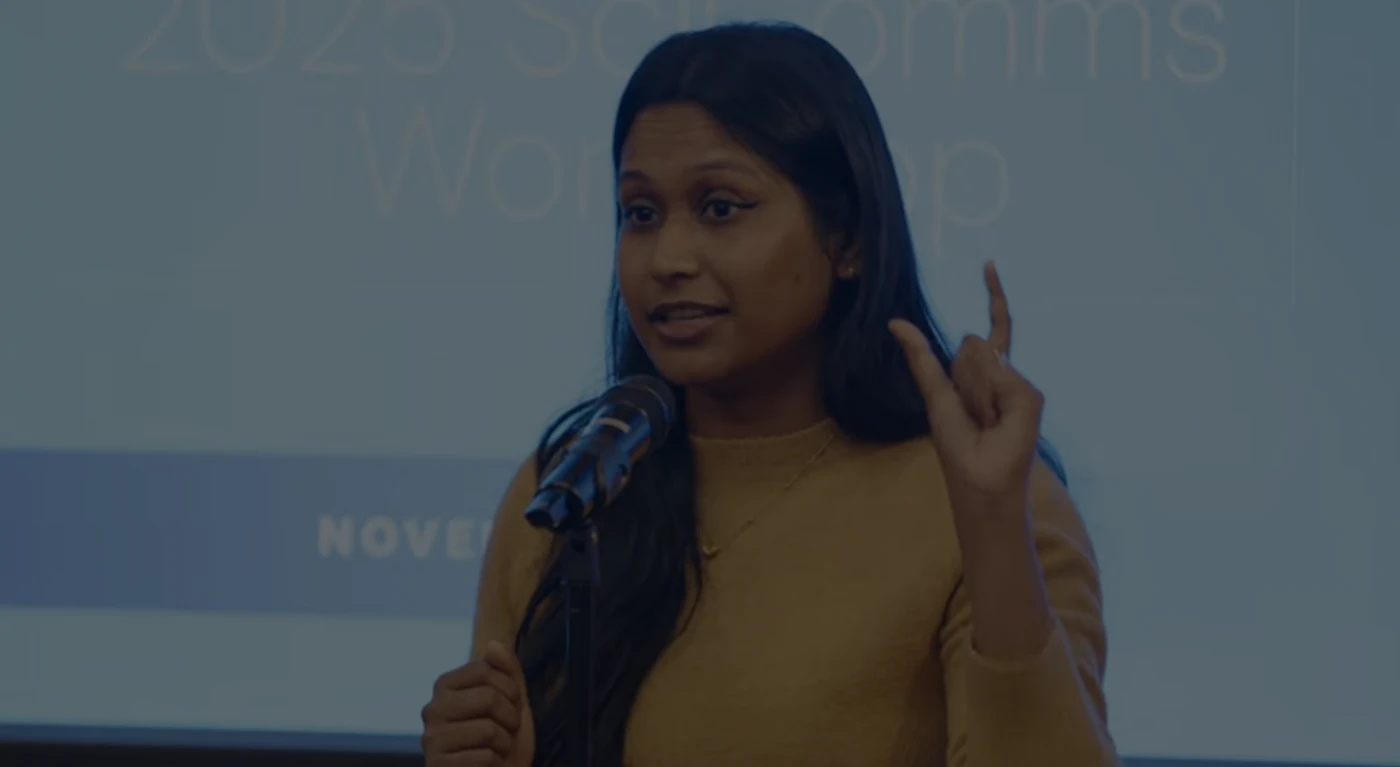
Sanjana Curtis
| Program | The Eric and Wendy Schmidt Awards for Excellence in Science Communications |
| Organization | Oregon State University |
| Field of Study | Astrophysics |
Dr. Sanjana Curtis, a 2024 Eric and Wendy Schmidt Awards for Excellence in Science Communications winner, uses nuclear astrophysics to trace how exploding stars forged the elements of the periodic table and, by powerfully communicating this science through writing, video and education, she is transforming both our understanding of the universe and who feels invited to explore it.
Explaining complex ideas to broad audiences has sharpened Curtis’ thinking, prompting new questions and perspectives that rarely emerge within highly specialized subfields. Questions from students, educators and the public have influenced how problems are framed and explored, strengthening the research and opening new directions.
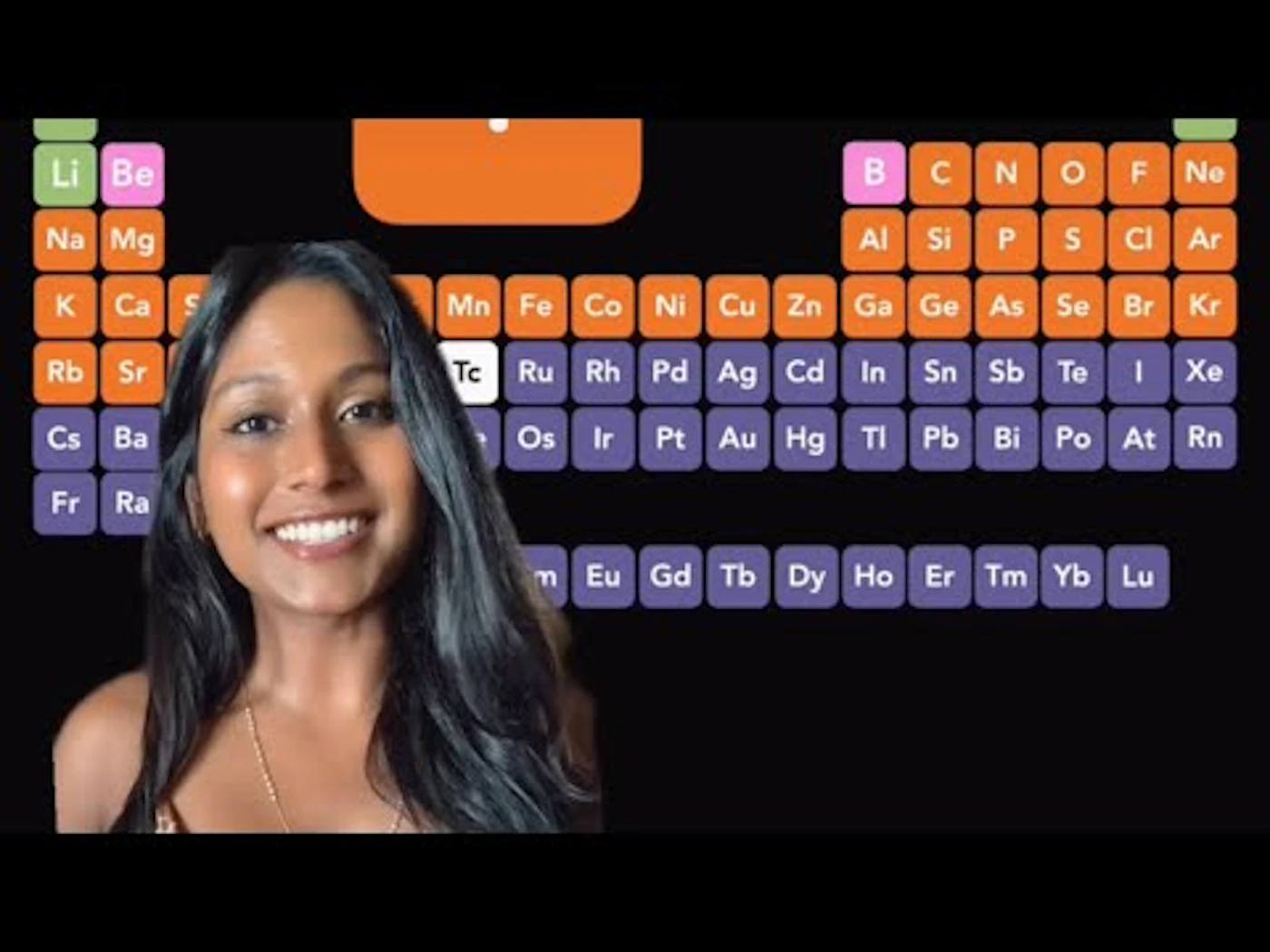
The work has also inspired others. Students now reach out after encountering Curtis’ research through short-form videos rather than faculty webpages. Young people across continents see someone who looks like them doing cutting-edge science and begin to imagine themselves in similar roles. This visibility helps dismantle myths about who can be a scientist and reinforces the idea that science is embedded in everyday life.
Curtis’ motivation is rooted in curiosity about how the universe works at its most fundamental level. “Nuclear astrophysics brings together extremes of gravity, temperature, density and particle physics into a single, messy, beautiful system,” she says. Studying these conditions not only advances our understanding of stellar evolution but also places nuclear physics at the core of astrophysics, where tiny particles drive the grandest cosmic events.
Today, the impact continues to grow: through visual storytelling, classroom integration and an upcoming popular science book, Starforged, which brings the story of element formation to an even wider audience. As a new professor, Curtis is now translating this work directly into lessons for the next generation to understand not only how the universe works, but how deeply connected they are to it.