
Costas Katsimpouras
| Program | Virtual Institute for Feedstocks of the Future (VIFF) |
| Organization | Massachusetts Institute of Technology |
| Field of Study | Biosciences |
Large-scale dairy operations send immense quantities of whey into the waste stream, but Costas Katsimpouras and DIWAV are engineering a process to convert that dairy industry byproduct into high-value carotenoids that a range of industries depend on.
Costas Katsimpouras knows his Greek yogurt.
“It was a staple,” says the MIT research scientist, who grew up in Greece. “You have to add honey, always.”
The yogurt he enjoyed growing up was traditionally strained to make it thicker than regular yogurt. “This is a defining feature of Greek yogurt that gives it its creamy texture and naturally higher protein content,” Katsimpouras says. “However, during that process, you inevitably generate acid whey, the liquid that separates out when yogurt is concentrated.”
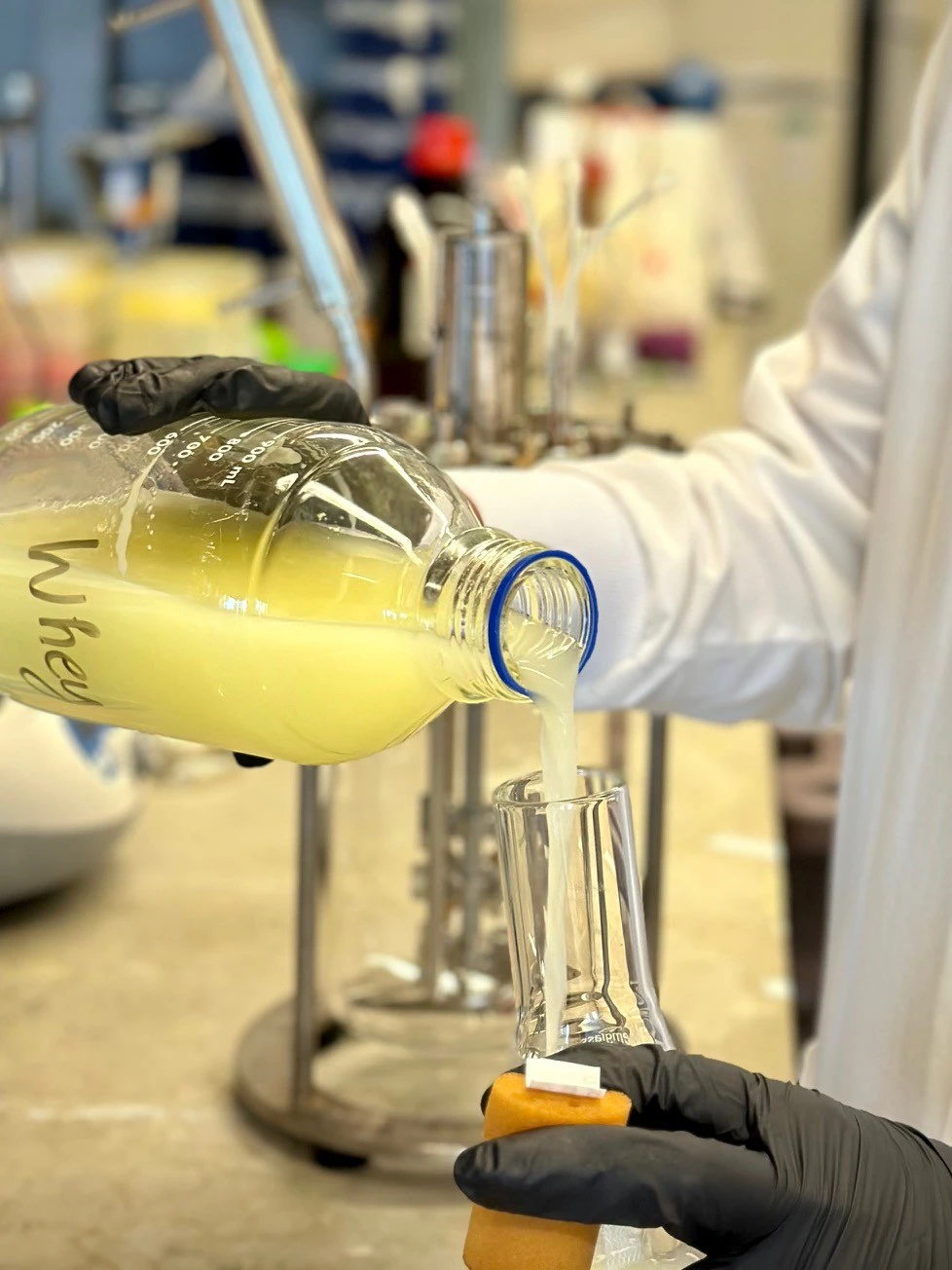
As Greek yogurt surged in popularity across the United States, production scaled up rapidly, leading to large volumes of this liquid byproduct. “The result is a significant waste-management challenge, as acid whey cannot be disposed of without proper treatment,” Katsimpouras notes.
Addressing this challenge and turning acid whey into an opportunity has become the focus of Katsimpouras’ current research, funded by Schmidt Sciences’ Virtual Institute on Feedstocks of the Future (VIFF). As a member of the Dairy Industry Waste Valorization (DIWAV) project, Katsimpouras and his team are exploring how the carbon found in whey can be diverted from low-value applications and transformed into everything from cosmetics to fish food to food ingredients.
The key ingredient to create from whey: carotenoids.
“They’re called that because they were first isolated from carrots,” Katsimpouras says of the compounds, also found in certain fruits and flowers. “They are natural colorants and powerful antioxidants.”
While carrots and other plant-based sources tend to produce only small amounts of carotenoids, and require significant inputs in terms of arable land and fresh water, DIWAV is working to develop a scalable microbial process that can generate these valuable compounds far more efficiently.
Carotenoids have a variety of applications, Katsimpouras notes. “For example, clinical trials have shown that lutein, a carotenoid isolated from marigold flowers, can help reduce the risk of macular degeneration, while beta-carotene, another well-known carotenoid, is often incorporated into sunblock to help protect skin from UV-induced damage.” Carotenoids can also appear in animal feed as replacements for synthetic dyes. Astaxanthin gives farmed salmon their characteristic pinkish tinge, and lutein and beta-carotene are also used to ensure the orange-yellow hue of egg yolks.
“It matters for consumers,” Katsimpouras says. “A deeper pink salmon flesh is associated with higher quality, and a pale fillet feels off…. People also prefer natural products, yet the aquaculture industry still relies mostly on synthetic astaxanthin.”
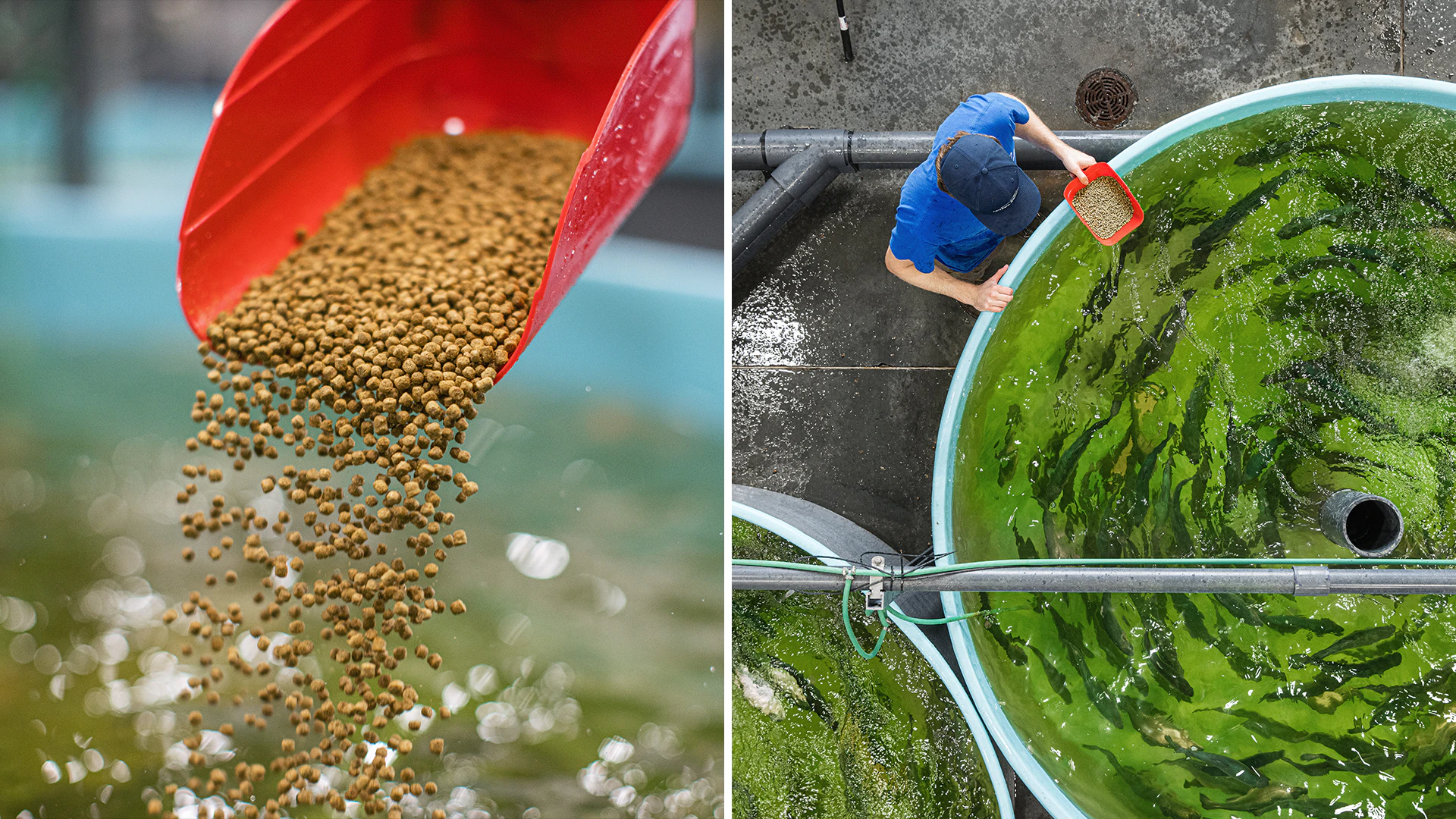
The upgrading of wasted whey into high-value ingredients is a win-win. “By developing all these technologies that take advantage of such overlooked feedstocks,” he says, “we are not just reducing waste, we can create new market opportunities, create more jobs, and support local communities.”
In the first year of the project, Katsimpouras and his team researched the feedstock itself—what types of milk, processes and products generate which types of whey. “This guides our engineering process,” he says. “When we have different profiles of feedstock, we need to know how to use them and get the same result at the end.”
The team then showed that their engineered microbes can turn whey’s nutrients into targeted carotenoids. “We’ve demonstrated that our approach efficiently processes acid whey into the compounds we want,” Katsimpouras says. “Results indicate yields that could support industrial‑scale production.”
Alongside the scientific research, VIFF has provided the researchers with community and networks. “In academia, we sometimes tend to focus on one specific aspect of the problem,” Katsimpouras says. “VIFF has opened the door to us to collaborate with multiple feedstock generators, community groups and industry partners. We’ve gained new insights into the dairy sector, and we’re continuing to learn.”
He adds, “Through VIFF, we’re also able to engage with other funded groups and discover common approaches to shared challenges.”