
The LFAST Telescope
| Program | The Eric and Wendy Schmidt Observatory System |
| Organization | University of Arizona |
| Field of Study | Astrophysics & Space |
The Large Fiber Array Spectroscopic Telescope (LFAST) team is proving that an array of many small, rapidly manufactured mirrors can rival the giants at a fraction of the cost and time, rewriting the economics of astronomical discovery
Astronomers now know, in principle, how to search for life on other worlds. When starlight passes through a distant planet’s atmosphere, oxygen, methane and water leave faint chemical fingerprints in the spectrum. With enough photons and enough precision, a telescope can read those signatures. The science is ready. The instruments are not.
The trouble is one of diminishing returns. The giant telescope model carries price tags in the billions and timelines measured in decades. And there is a hard ceiling looming. The engineering challenges of scaling a single mirror don’t grow proportionally with size but seem to obey a steep power law. Want to scale a thirty-meter mirror to a fifty-meter one? The cost doesn’t double, but can multiply by ten.
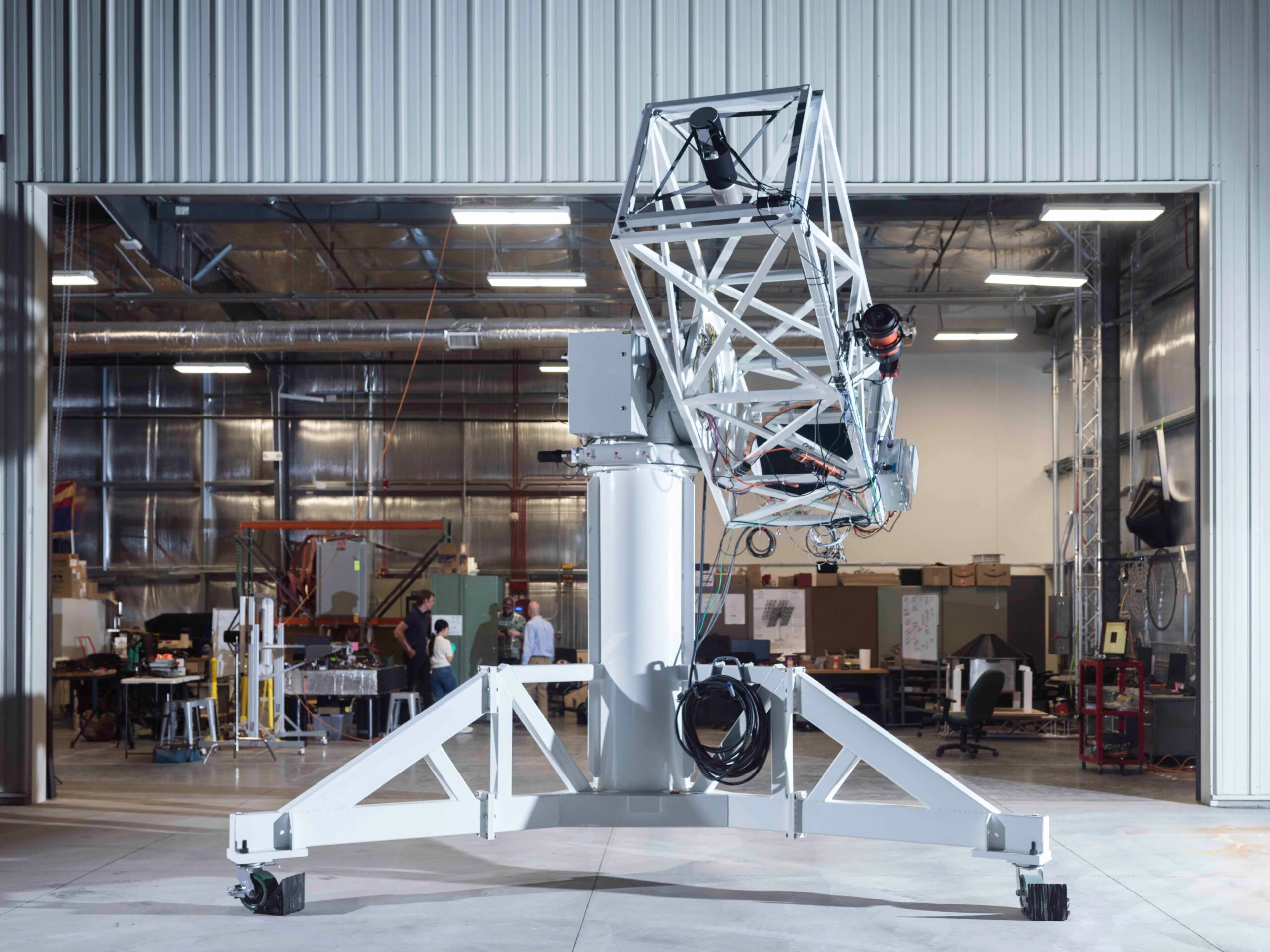
Dr. Chad Bender, an astronomer at the University of Arizona’s Steward Observatory, leads the Large Fiber Array Spectroscopic Telescope (LFAST) project in an effort to break this cycle entirely. Rather than grinding one enormous mirror to nanometer perfection, LFAST builds an array of many smaller mirrors whose collected light is funneled through optical fibers into a shared spectrograph—an instrument that splits light into its individual colors, much like a prism. The combined collecting area matches that of a single large mirror, but at a fraction of the cost. The idea traces back to legendary professor Roger Angel, who recognized that not all next-generation science requires the fine imaging detail that larger mirrors intrinsically provide. Much of it demands sheer light-collecting power, which smaller, easier-to-produce mirror arrays can deliver just as well.
What makes LFAST viable now is that producing these smaller mirrors is far faster than making conventional telescope mirrors, which are cast in furnaces over months then ground and polished over years. Each LFAST mirror can be produced in weeks. The goal is not perfection on any single mirror but adequacy at scale and speed—when you have hundreds of them, good enough adds up to extraordinary.
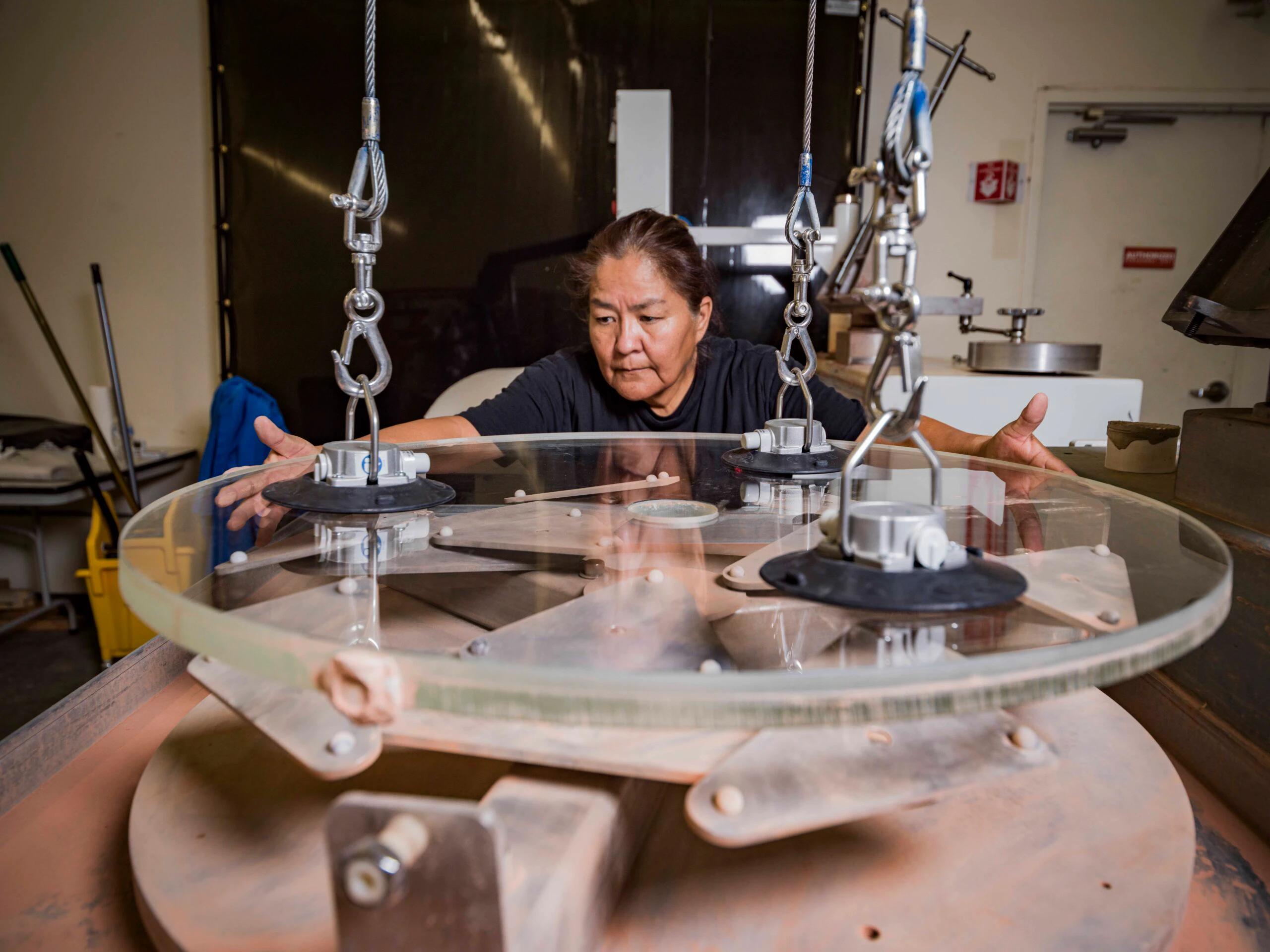
The design is modular by nature. If a mirror breaks or needs maintenance, single units can be swapped without reconfiguring the whole array and interrupting the science. This makes LFAST not just cheaper to build but fundamentally easier to maintain and scale. Bender envisions a future in which arrays of this kind deploy at multiple sites, working collectively to observe targets longer than that target might be visible from any one location alone.
Schmidt Sciences funded LFAST at a stage when the concept was promising but unproven beyond the bench, backing the transition from laboratory demonstrations to a working prototype array. That investment enabled the team to refine the rapid mirror fabrication process, figure out how to route fibers from many telescopes into shared spectrographs, and validate the approach at a meaningful scale. The willingness to support high-risk, early-stage hardware is what made the project possible at all.