
Peter Melchior
| Program | Optimizing Subaru PFS |
| Organization | Princeton University |
| Field of Study | Astrophysics & Space |
Dr. Peter Melchior’s team is building machine learning tools that don’t just analyze astronomical data but decide what to observe next—reshaping how astronomy extracts meaning from an avalanche of information.
Dr. Peter Melchior describes his research as “running an import-export business of knowledge.” An assistant professor at Princeton University with joint appointments in astrophysics and the Center for Statistics and Machine Learning, he moves ideas between fields: techniques from cosmology into other domains, innovations from computer science back into astronomy. His Schmidt Sciences project embodies both directions at once.
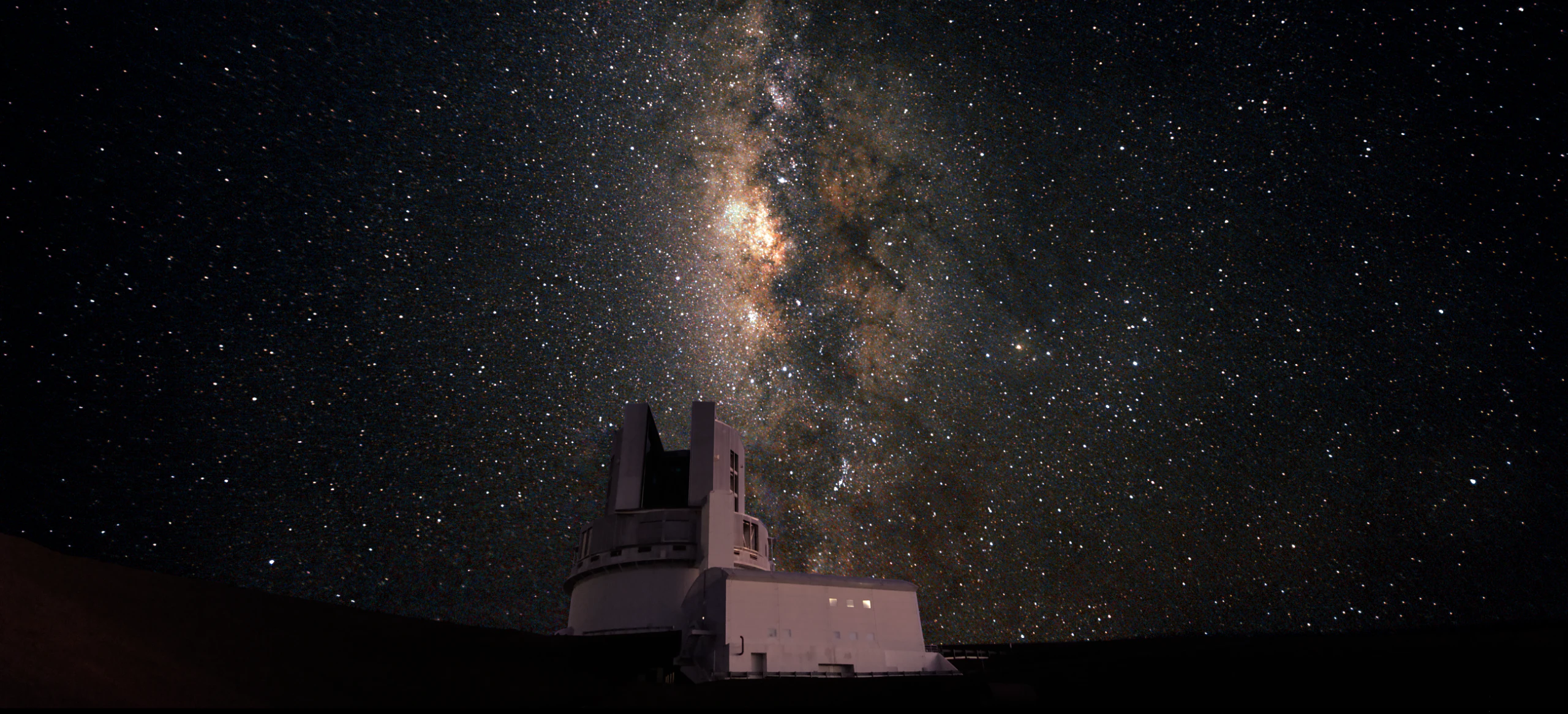
The project centers on the Subaru Telescope, an 8.2-meter instrument in Hawaii whose Prime Focus Spectrograph (PFS) can observe thousands of astronomical objects simultaneously. Melchior’s team builds machine learning systems that analyze incoming data and use what they learn to adjust future observations. Rather than following a fixed plan, the telescope can thus make informed decisions about which targets to revisit, which to skip and which to examine more deeply. The telescope, in effect, gets smarter over time.
Traditional astronomical surveys don’t work this way. Observations are typically planned in advance, executed over years and analyzed after the fact. Melchior’s approach collapses that sequence into a continuous cycle. The machine learning techniques his team develops—for determining how useful a given dataset is, or for planning optimal future observations under uncertainty—apply to any field dealing with complex, evolving data streams.
With Schmidt Sciences support, the project has hired several postdocs and students who would otherwise have left the field entirely, according to Melchior. The funding also connected Melchior’s team with LINCC Frameworks, another Schmidt Sciences-funded initiative, which allows the group to embed its tools more deeply within the broader Legacy Survey of Space and Time (LSST) community. The large telescope surveys coming online now and over the next few years will generate an unprecedented avalanche of astronomical data—precisely the context where adaptive methods become not just useful but essential.
Melchior is candid about the ambition involved. Traditional funding tends to reward proposals that can guarantee success in advance. Schmidt Sciences backed a project where much was unknown and where the team had strong suspicions but no proof that novel machine learning methods would work on this particular class of problems. That bet has paid off. The tools are being adopted on smaller telescopes, and the methodology of treating observation planning as a learnable, improvable process is reshaping how the community thinks about large surveys.
For Melchior, the work is personal. He sees the conventional model in astronomy—where a single student builds an analysis method over years and the knowledge vanishes when they leave—starting to crack. “I would like to change that,” he says. “Given the complexity of our instruments and the difficulty of cutting-edge science, that aspect is just inefficient and doesn’t help us as a community.” His vision is a professionalization of methodology development in astrophysics, so that “we have the knowledge to build the tools we want rather than putting a band-aid on the outdated tools we have”—a quietly radical ambition that is beginning to take hold.
Astrophysics & Space
arXiv | Sep 18, 2024
Subaru PFS Optimization