
Elizabeth Onderko
| Program | BioMADE |
| Organization | Capra Biosciences |
| Field of Study | Biosciences |
Elizabeth Onderko and Capra Biosciences reimagined the bioreactor, transforming entrenched designs that weren’t much different from beer fermenters into adaptable, modular systems built to efficiently produce particular materials while reducing processes’ carbon footprints.
If you’ve been to your local craft brewery you know what a bioreactor is, and why it matters.
The large, shiny silver vats frequently seen at small brewers create a closed, welcoming environment for what is essentially sugar water to transform, with the help of yeast, into beer.
And while bioreactors have far more uses beyond beer, most of them still look like the stock at your local bar.
“Most of bioreactor technology today is based on the design for ethanol fermentation,” says Elizabeth Onderko, co-founder and CEO of Capra Biosciences. “But microbes can make other products that don’t lend themselves to that design…. And at the end of the day, the question for biomanufacturing is how efficiently you can grow your microbes, make a product and get that product out.”
Onderko and her Capra Biosciences co-founder Andrew Magyar developed a different type of bioreactor, one that worked by linking several separate reactors, each the size of a magic marker, into one large system. These reactors were less expensive, modular, continuously operating and could connect directly into downstream processes—and they could make materials that didn’t do as well in a traditional bioreactor.
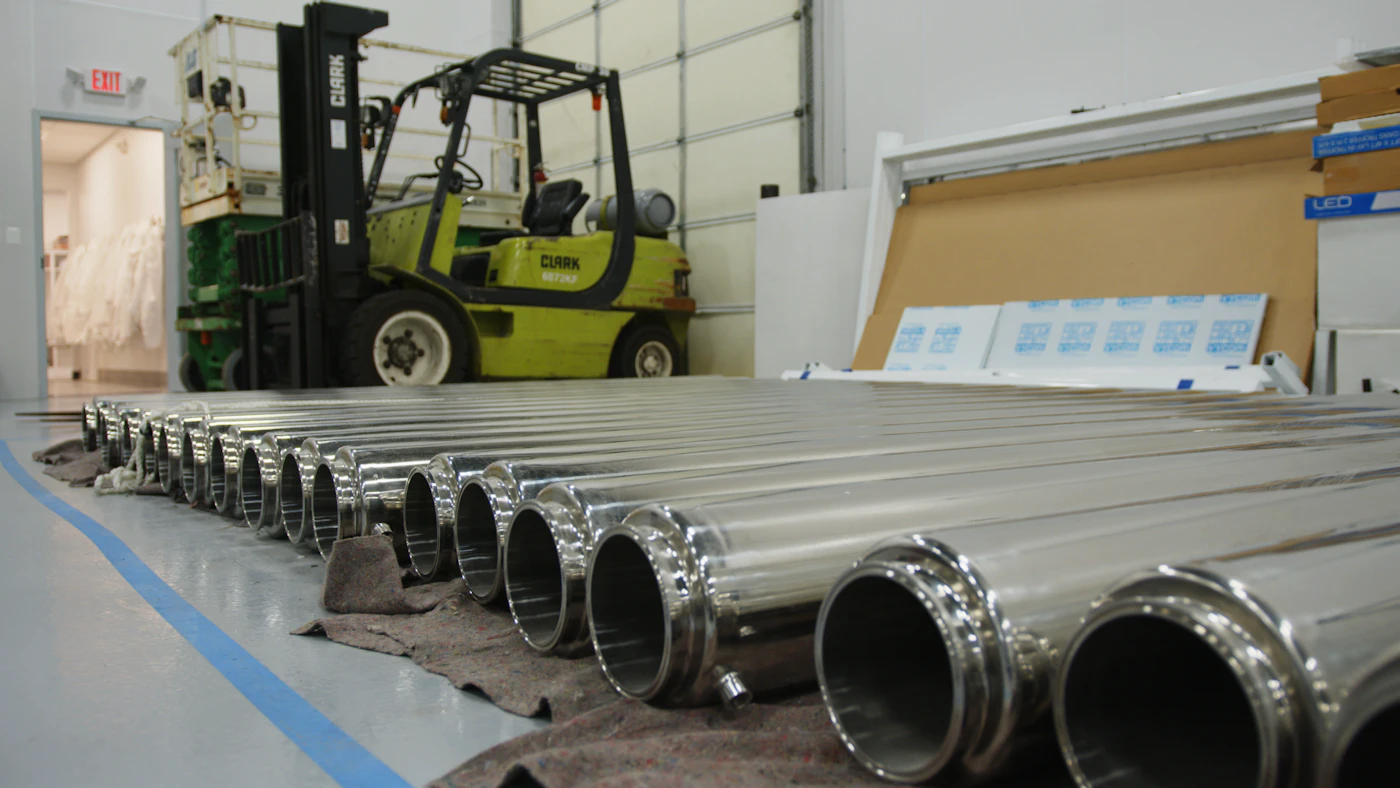
“Schmidt Sciences helped us take our reactors from that magic marker size to nine-foot-tall, multiplex columns that are about 400 liters each,” says Onderko. (For reference, that’s the size of a standard home refrigerator.)
With support from Schmidt Sciences and the BioMADE program, Onderko and her colleagues were able to collaborate with researchers to scale up and design the next generation of their technology. (They ended up recruiting and hiring one of the students they worked with.)
They also explored how to reduce the carbon impact of their technology and which feedstock worked best for the platform, as well as exploring the latest sensor technology to monitor their bioreactor environments.
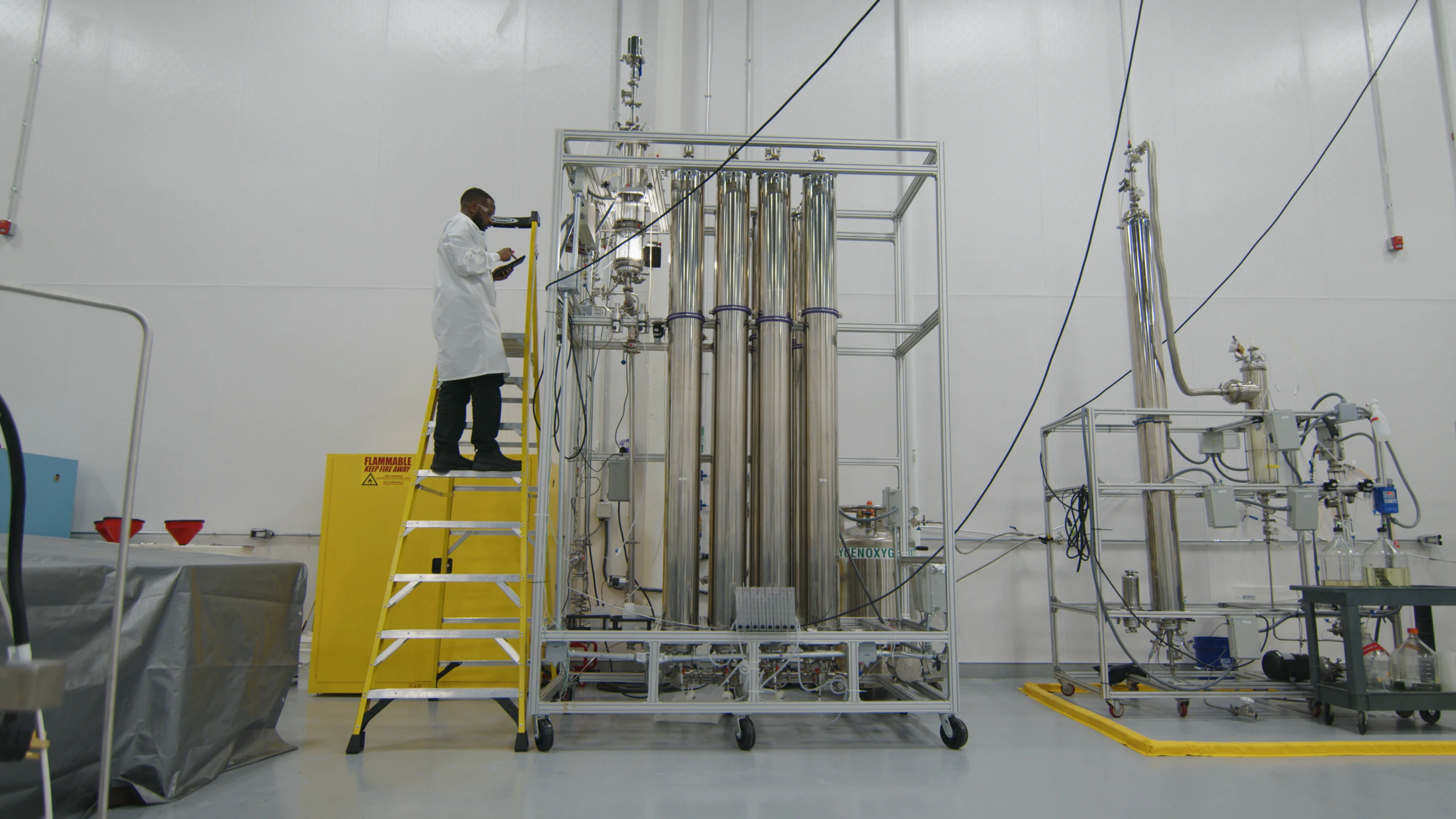
The funding from Schmidt Sciences, Onderko says, “helped lay the groundwork for all the projects that have come since.”
Capra Biosciences is currently exploring how to use its reactors to more efficiently manufacture key ingredients for pharmaceutical products—an area of expertise for the company, which commercially produced the world’s first 100% fossil-fuel-free retinol.
Onderko adds, “it is very validating to see that so many other people have identified this issue as a problem worth solving.”