
Jacqueline Campbell
| Program | Schmidt Science Fellows |
| Organization | Asterisk Labs |
| Field of Study | Climate |
Jacqueline Campbell and Asterisk Labs bridged a significant gap in climate science by processing discarded satellite imagery into a novel, accessible source of data on cloud altitude, phase and temperature, unlocking new potential for research and modeling of clouds’ influence on surface temperatures.
For years, even as clouds were emerging as an important area of climate research, some of the most valuable scientific data on cloud formation and behavior were being thrown away. Dr. Jacqueline Campbell, an alumni of the Schmidt Science Fellows program and co-founder of the UK-based worker cooperative Asterisk Labs, is rescuing those data from the trash.
Clouds that block satellites’ view of earth are a problem for satellite programs like the E.U.’s Copernicus Sentinel-2 mission. More than half of the imagery gathered by Sentinel-2 is discarded because of cloud interference. But satellite images of clouds are exactly what researchers need to study what Campbell calls “the biggest unknown in all of our climate models.”

The influence of clouds can either warm or cool the planet’s surface, depending on a range of factors including their composition and altitude. As climate change raises temperatures around the world, understanding the interactions between clouds and heat is essential for modeling local impacts. Cloud researchers have historically been caught between scarce, fine-scale measurements, and low-resolution cloud-specific satellites. While these low-res satellites can identify broad patterns, the lack of high-resolution data makes it very difficult to answer fundamental questions in detail, like exactly how much ice or water a cloud contains or how much light passes through it. It turns out the answers to these questions are on the proverbial cutting-room floor at satellite agencies.
Uncorrected imagery on its own isn’t very useful for cloud research, but through an Advanced Research and Invention Agency-funded project called Clouds Decoded, Asterisk Labs applies computational science to extract cloud data as a byproduct of Sentinel-2 satellites’ primary mission. “The satellite actually takes images in 13 separate spectral bands. Because it is moving so fast, and there’s about a two-second delay between when the first and the last band are acquired. You get this fringing effect where everything’s slightly offset. When they process the imagery, they line it all back up so that the images of the land are in focus in all 13 bands. But if you trace those images back up to cloud height, they’re offset again,” Campbell explains. “We’ve developed an algorithm to get cloud height from Sentinel-2 imagery which then tells us a lot about the cloud temperature.”
Asterisk Labs has also developed its own model for how light interacts with clouds given its properties, simulating how this will appear in a Sentinel-2 image which enables a neural network-powered machine learning system to calculate how much light passes through a cloud, how much of its composition is water or ice and the diameter of its liquid droplets or ice crystals. “None of that has ever been done with Sentinel-2 imagery before,” Campbell says.
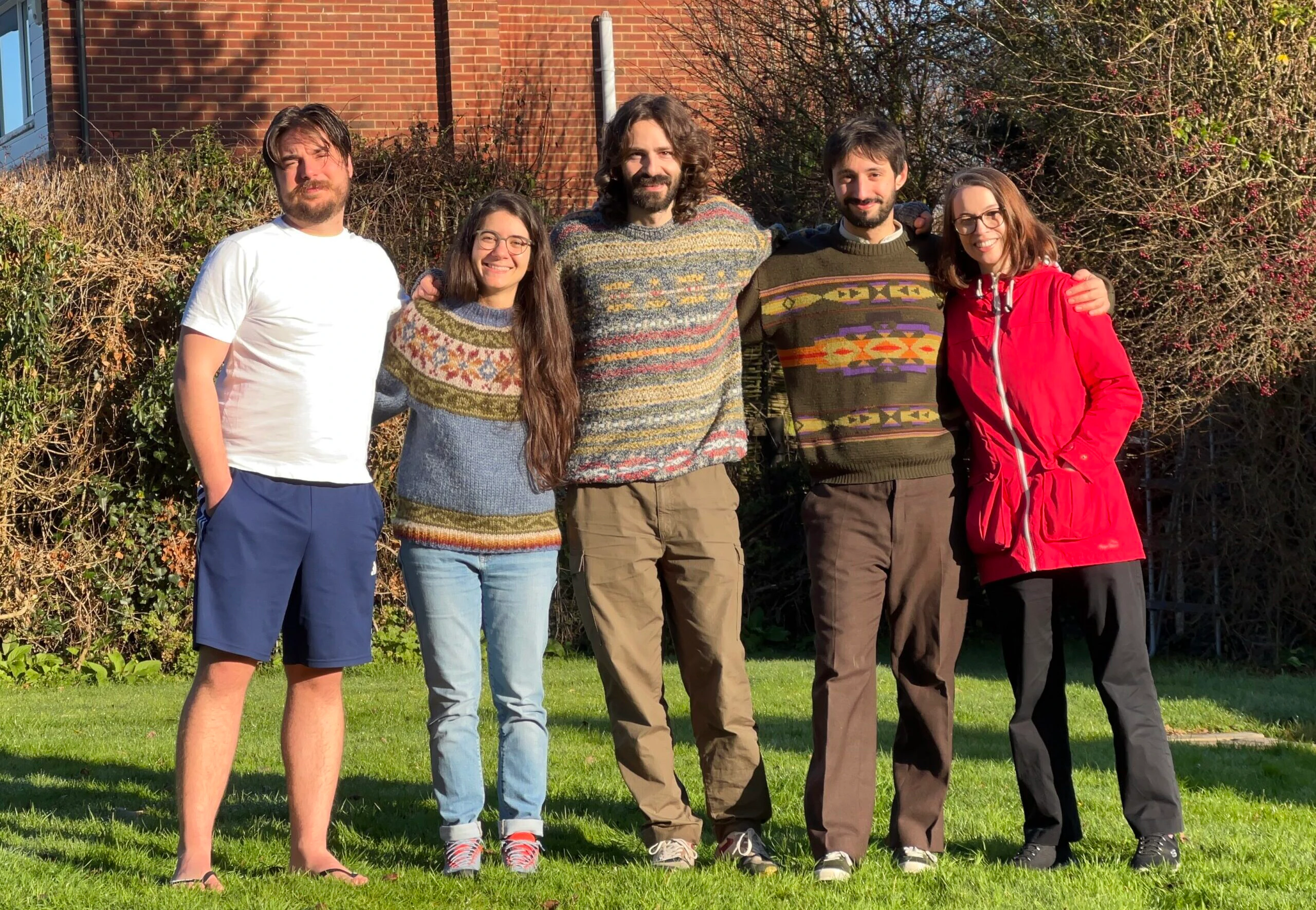
Looking ahead, Asterisk is working with a range of cloud and climate scientists to make use of Sentinel-2 data to understand cloud behaviour, and exploring how they can work with organisations like the European Center for Medium-Range Weather Forecasts (ECMWF) and the UK Met Office to support real-time analyses. And Campbell expects the group’s ongoing validation efforts to allow the open-source release of its data and models within the year.
When she began this work, Campbell says she was struck by how much there is to know about clouds, and by how little we know. Her research is changing that.