Owen McDougal
| Program | Virtual Institute for Feedstocks of the Future (VIFF) |
| Organization | Boise State University |
| Field of Study | Biosciences |
There is incredible potential to find value in agricultural waste. Currently waste treatment and byproduct transportation represent soaring costs for industrial food processing facilities. To address this challenge, WAVES is pioneering technology to reduce the water content of byproducts, upcycle the solids and return real value to the farm and factory.
If you’ve ever had perfectly crispy french fries delivered to your door, you have bioscience research to thank.
“During the COVID-19 pandemic, demand for restaurant potatoes was down,” says Owen McDougal, professor of chemistry and biochemistry, and founding director of the Food and Dairy Innovation Center at Boise State University. “Restaurants struggled to stay afloat, and many reverted to the takeout market. But french fries don’t travel well, often getting cold and soggy enroute, making for a poor consumer experience. The revolutionary solution was to upcycle starch from potato processing for use as a coating during frying, resulting in hot, crispy french fries delivered to your door.”
Potatoes—along with onions, sugar beets, barley, oats and dairy—have much more to offer, if only researchers can find a way to efficiently recover nutrients from waste streams.
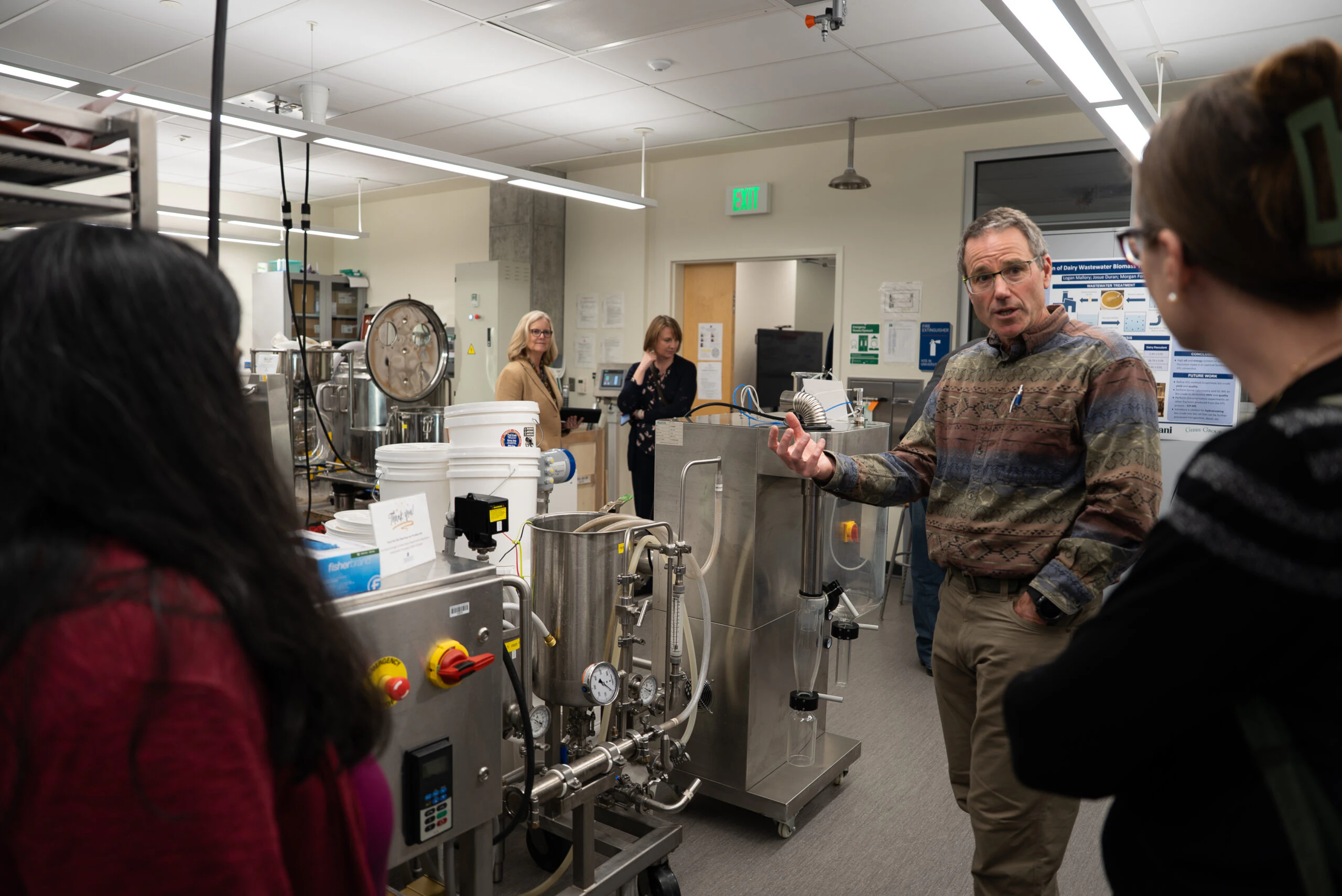
“This is the biggest challenge facing the food processing industry at the moment,” McDougal says. “Byproducts of food and dairy processing range from 60% to 85% water, and that weight results in high transportation costs that are passed on to American consumers. If we can utilize emerging technologies to reduce the amount of water being transported and provide even a small return on upcycled solid material, companies will jump on it, and in five or 10 years, the global effect will be measurable.”
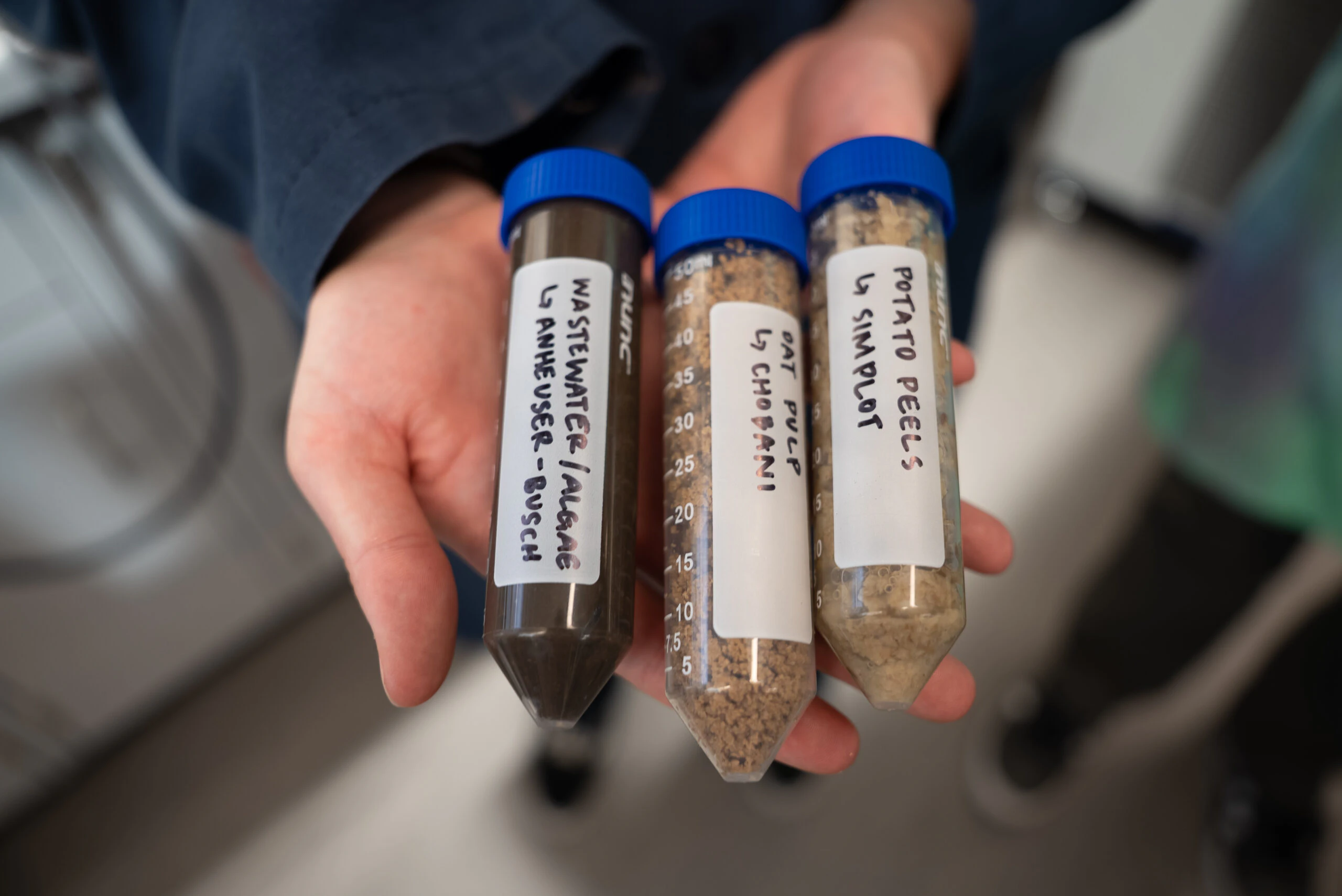
That’s where Schmidt Sciences’ Virtual Institute on Feedstocks of the Future entered, catalyzing the group effort that became WAVES, or Wet Agricultural Value Enhanced Separations. With access to dozens of food and agricultural byproducts, like oat pulp, acid whey, sweet whey, potato peels, and algae flocculant, the WAVES team plotted a series of studies over five years of funding.
“We’re focusing on technologies that have high potential for impact—if we can’t scale the volume of byproduct treated within a couple years, we’ll switch to technology solutions that are more effective,” says McDougal.
The project’s homebase at Idaho National Laboratory and Boise State University provides proximity to several nearby food processors. The Chobani facility in Twin Falls, Idaho, typically generates up to 2 million gallons of wastewater each day, while Anheuser Busch in Idaho Falls creates 1.5 million gallons daily.
“Eastern Idaho has a 65-year drought,” McDougal says. “Food processing companies in Idaho are worried about the cost of wastewater return to municipal treatment facilities, and working directly with these companies can help our team understand the custom needs that must be addressed.”
In the case of Chobani, McDougal and his fellow researchers are exploring how to use dimethyl ether extraction to separate the nutrient rich solids and purify the water. The solids have value for use as nutritional supplements, and the purified water can be reused. Chobani has a sustainability program that seeks to return all water that leaves their facility as potable water. The cost to achieve this goal is high, and with WAVES assistance, economical solutions may emerge.
The problem can be trickier for smaller food producers, who have less budget and less technology, and face $100,000-an-hour fees and possible production shut downs if they produce too much waste water. With smaller cities lacking sufficient wastewater treatment capacity to accommodate large scale food process operations, much of the water is shipped elsewhere at further economic and environmental cost.
McDougal is always considering what might be possible with novel applications of existing technologies.“Can we reduce the amount of water consumed by a facility?” McDougal says. “Can we upcycle the waste and create a higher-value output? Can we do this all onsite at a level that’s scalable and affordable?”
He believes this WAVES team, in collaboration with the other VIFF-funded groups, will find the answers, saying, “When we do it’s a win-win.”