Debashish Bhattacharya
| Program | Virtual Institute for Feedstocks of the Future (VIFF) |
| Organization | Rutgers University |
| Field of Study | Biosciences |
Debashish Bhattacharya’s sargassum bioprospecting hasn’t struck gold, but his exploration with the SaBRe team has redirected the search for a solution to mountains of seaweed clogging shorelines around the Atlantic.
When Debashish Bhattacharya was 8 years old, he and his family boarded a plane, traveling from India to Canada, where his father had secured a job in the shipping industry.
“We walked down the stairs to deplane, and we were in the middle of a snowstorm,” says Bhattacharya, a distinguished professor at Rutgers University. “We went from a tropical country to a freezing country.”
But one thing helped Bhattacharya grow accustomed to his new life.
“I was absolutely drawn to the ocean,” Bhattacharya says. “I learned to dive, fish, canoe. Every chance we got, we were in or on the water.”
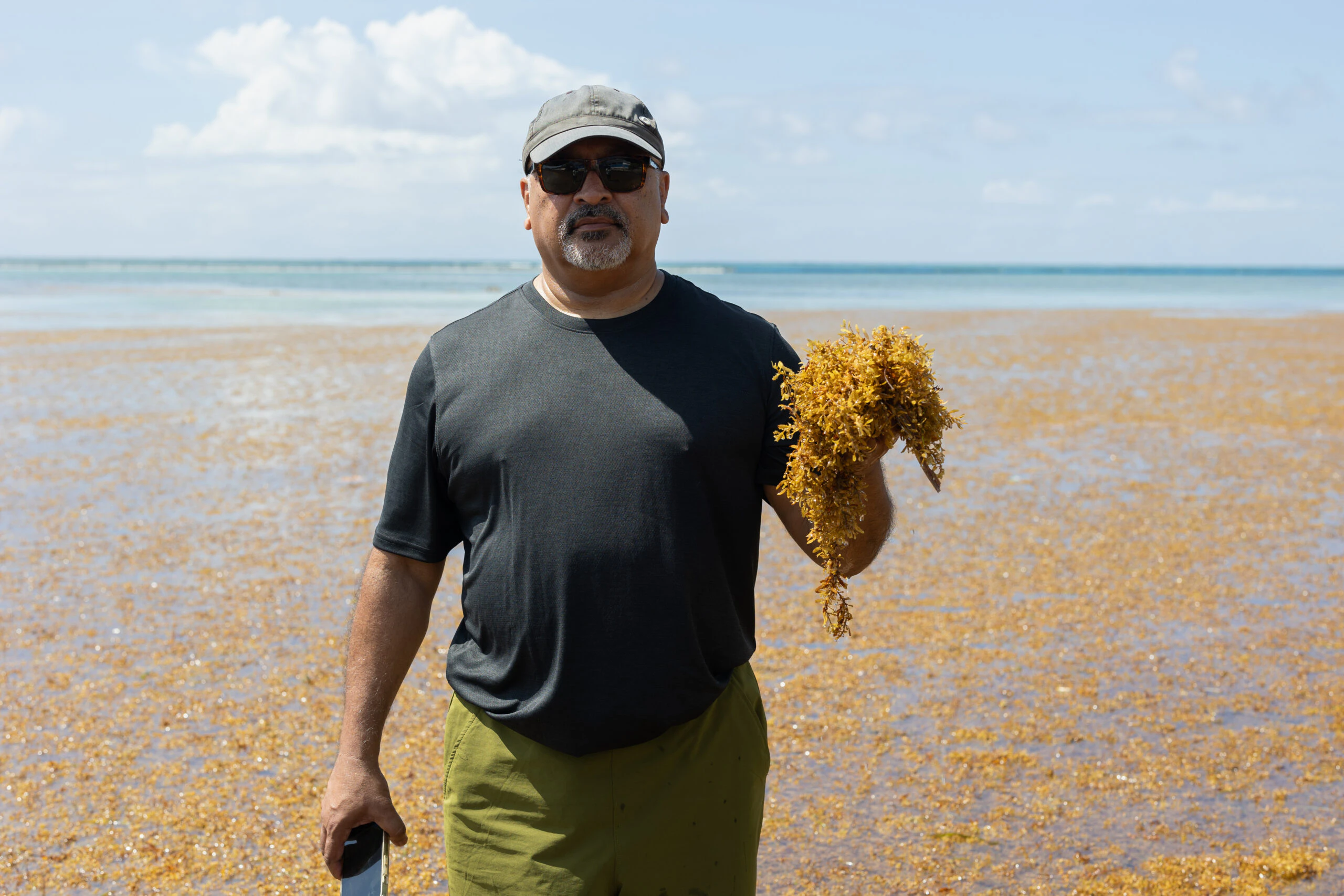
Bhattacharya went on to earn degrees in oceanography and environmental science, developing the first molecular tools to study seaweed biology and evolution and spending his career examining various types of seaweed and microscopic algae. When approached by a team of researchers to join the Sargassum Biorefinery (SaBRe) project, supported by Schmidt Sciences’ Virtual Institute on Feedstocks of the Future (VIFF), he jumped at the chance.
“Sargassum was the one brown seaweed I hadn’t really worked on,” Bhattacharya says. “You used to have the Sargasso Sea—but now Sargassum is everywhere, and that tipping point happened only in the last few years.”
The species, Bhattacharya explains, is a “wonder of nature,” growing quickly by fragmenting, leaving huge flotillas of the seaweed dotting the ocean. The planet’s warming oceans have exacerbated that growth, from Africa to South America to the Caribbean, proving an immense ecological and economic problem for coastal communities around the Atlantic.
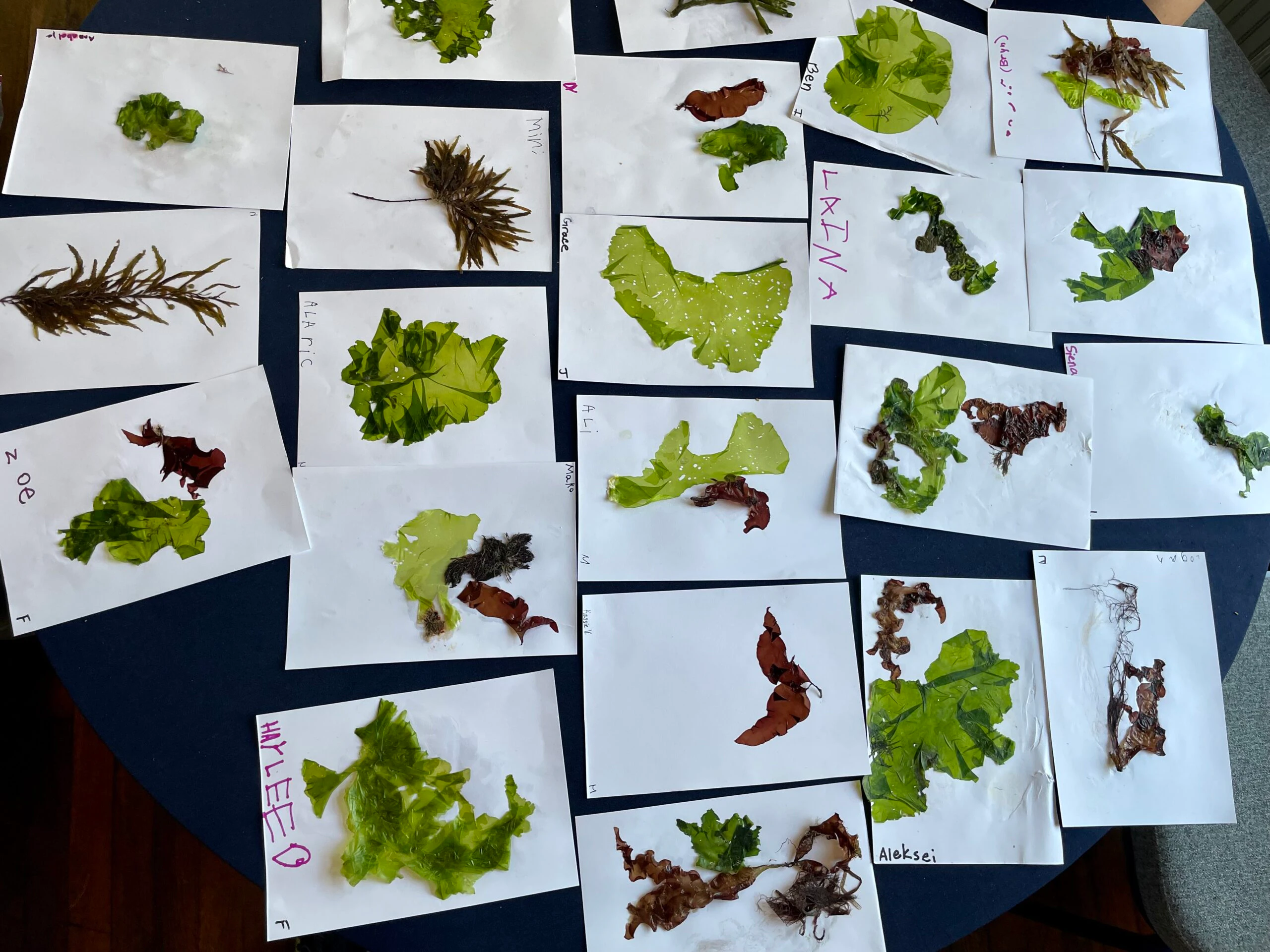
“Sargassum is home to fish and sea turtles and other animals in its natural state, and has significant ecosystem benefits….it is an amazing instrument for sequestering carbon,” Bhattacharya says. “But it is also very difficult to break down. As it piles up on the shoreline, it starts to rot. It smells, it’s toxic, it destroys beaches.”
The Sargassum problem, which hurts economies that rely on tourism and fishing, can also affect tourism along the Florida coast. In the United States, most seaweed-related research has focused on commercializing seaweed and making it a food product.
“While companies want to meet a market and make a profit, Schmidt Sciences is prepared to take on a massive problem without having a clear path forward,” Bhattacharya says. “We’re allowed to explore, to not know the solutions yet.” The SaBRe project seeks to address the Sargassum pile-up by first identifying how to break it apart without creating toxicity or environmental damage, and then by exploring how to transform the complex sugars within the seaweed into useful chemicals.
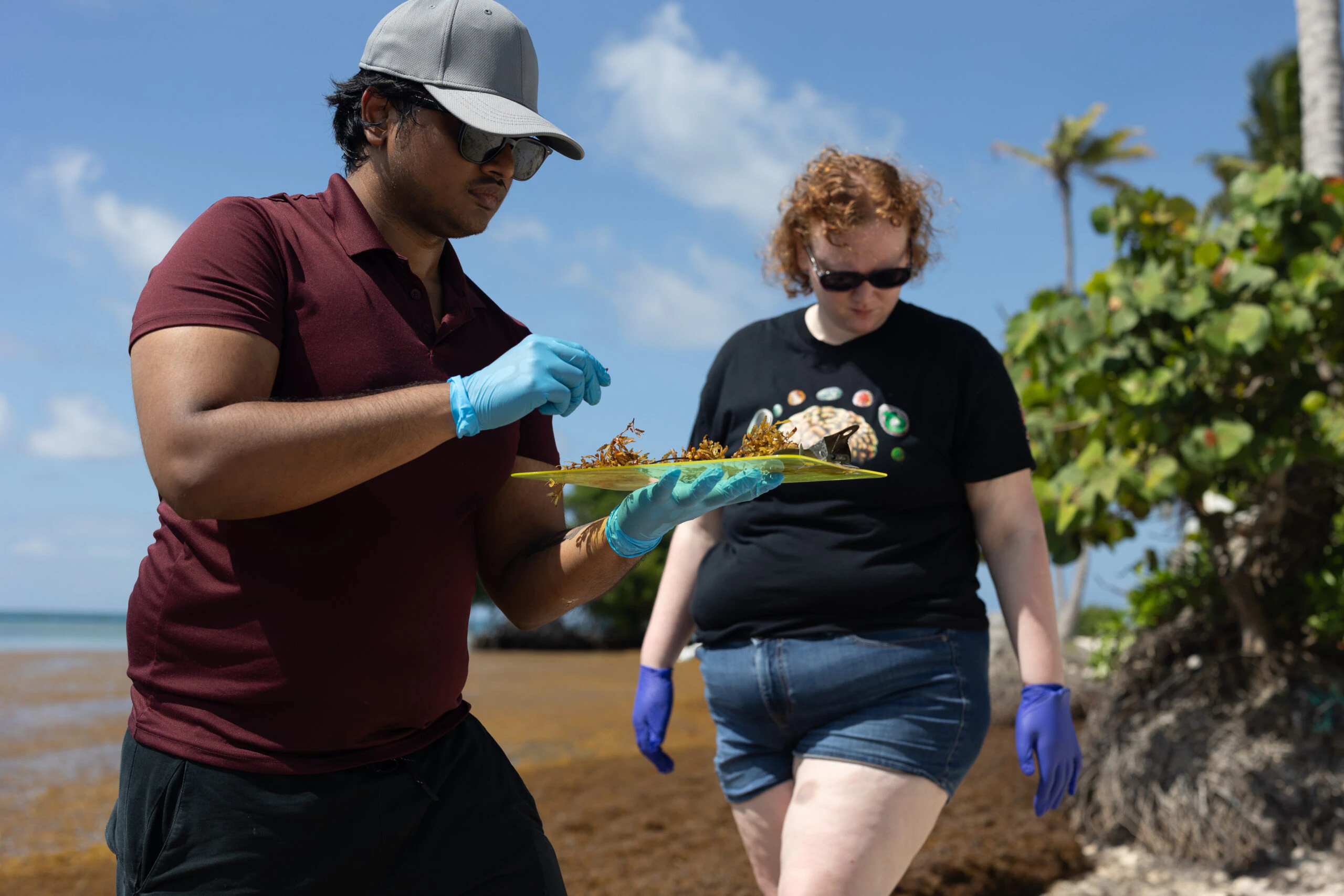
“We’re breaking down Sargassum and looking for gold,” Bhattacharya says. The team’s first experiment to degrade Sargassum and observe the results proved enlightening. When Sargassum is placed in a closed system, using heat or chemicals to spur breakdown, bacteria compete with each other and fail to effectively decompose the Sargassum.
“A closed system breakdown is not the way to go,” Bhattacharya says. “We need to go to nature and figure out what happens.”