
Vesna Bacheva
| Program | Schmidt Science Fellows |
| Organization | Cornell University |
| Field of Study | Plant Sciences/Micro Engineering |
Mechanical engineer Dr. Vesna Bacheva became a plant biologist to study how plants communicate, intrigued by a hypothesis with the potential to change the future of farming.
Plants talk and Schmidt Science Fellow Dr. Vesna Bacheva is learning their language. Her research explores fundamental questions about plants’ communication, for example between root systems and leaves, which scientists call long distance signaling. Do they use electric signals? Mechanical signals? How do they process information and respond?
“I’m an engineer by training, a mechanical engineer. But in my Schmidt Science Fellows pivot, I decided to work in plant biology,” she says. “My PhD was in microfluidics, the study of how fluids move to tiny channels and how they behave, mostly for building diagnostic devices. For me, plants are the most beautiful microfluidic structures. I wanted to know, how can I learn from plants and make better devices myself?”
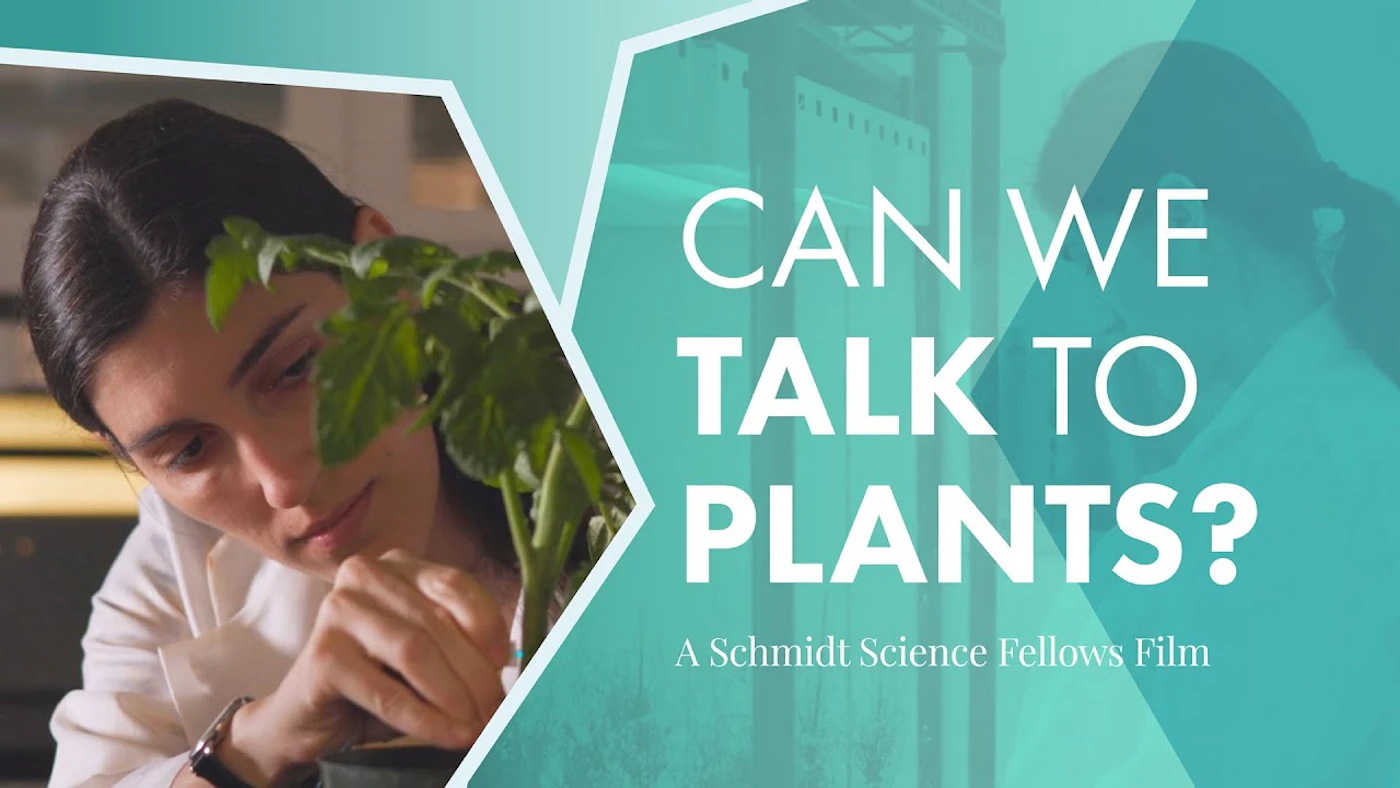
Bacheva’s project took her in a different direction, albeit still driven by a focus on real-world applications. “I’m part of CROPPS, a group of scientists that believe plants can tell us what they need and when they need it,” she says, explaining that communication between roots and leaves might be turned into visual cues to water crops or apply fertilizer.
She asks, if we understand the signals for those needs, can we reengineer the plant to also make a pigment that changes the color of its leaves, so farmers can see and respond to the signals? Individuals with these traits might serve as sentinel plants, living sensors that communicate how to boost productivity and reduce waste. (While not a scientific finding, Bacheva says her efforts to understand signals have already improved the lives of her houseplants.)
The group published a PNAS paper on their work in 2025, highlighting the potential importance of mechanics in plant communication, but noting that a more complete understanding will require further study into other aspects of communication. Bacheva and her team are devising more tests to fill in the gaps identified by their research, but she is also preparing for another pivot as she transitions to a new challenge.
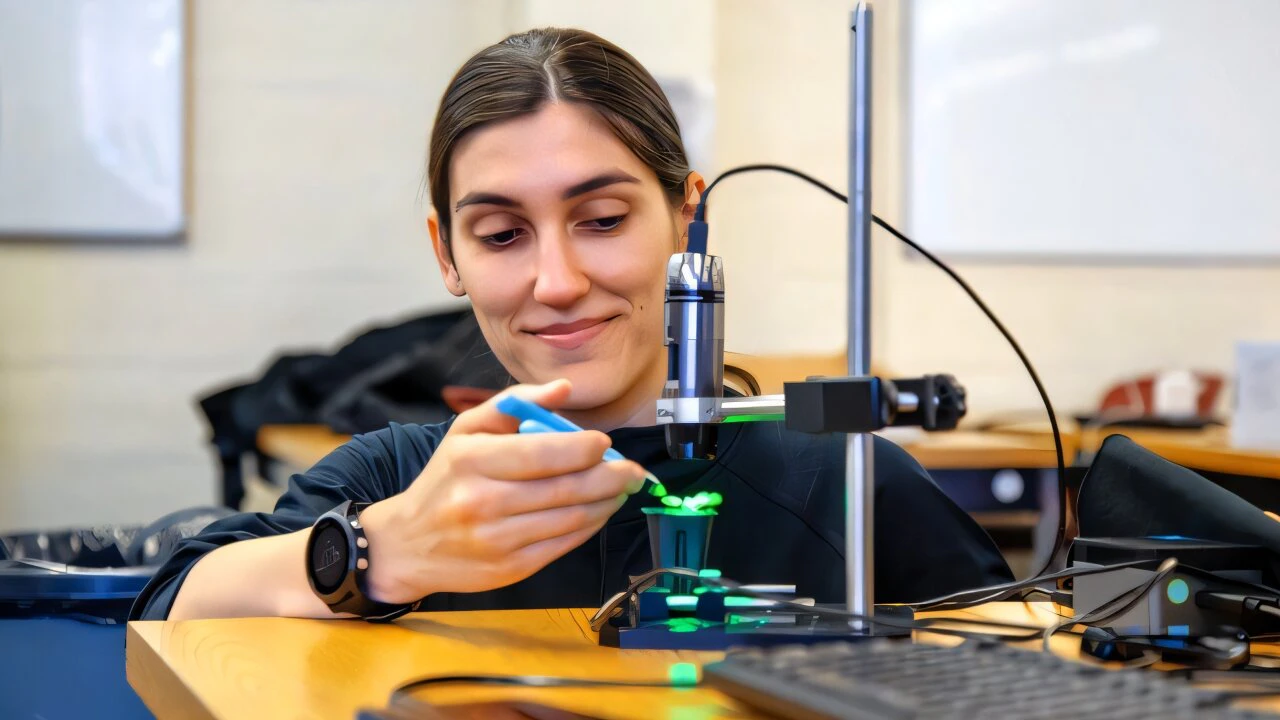
“I’ll be starting my lab in March, taking some of these topics with me, because this mechanical language is not just used in plant biology, but also in mammalian biology. Some of the discoveries I’ve made, I’ll try to study them across species,” Bacheva says. Although she notes that the most immediate impact in her research area is in plant science and agriculture, part of her lab experience will be trying to broadly understand how mechanical forces shape biology.
Bacheva credits Schmidt Science Fellows for making her more comfortable shifting approaches. “Because the fellows are so different, coming from different fields, different professional, cultural backgrounds, it helped me to grow personally and try to understand other people’s views and perspectives,” she says. “And to not be caged by mine, or feel like I don’t want to step into someone else’s field.”
Bacheva points to another vital area where Schmidt Science Fellows gain confidence: leadership. She says one of the biggest impacts of her experience has been the Science Leadership Program, where all fellows convene to build skills expected of science leaders – skills that aren’t formally taught in conventional academic environments. “I want to stay in academia, I want to lead a lab, but no one ever trains you for this. How do you manage people? How do you manage interdisciplinary projects? How do you talk to people who are not from your field?”