Turning simulations into reliable guides for experimental discovery.
Across chemistry, materials science, and biology, simulations are widely used—but rarely trusted to drive real experimental decisions. The main failure modes are well known: today’s models struggle to work across length and time scales, handle interfaces and defects, and predict disorder and dynamic motion. Unfortunately, these “messy” realities are exactly what controls performance in key technologies like catalysts, semiconductors, batteries, and drugs.
This pilot program aims to close the gap between computation and the lab bench by building AI-hybrid simulators that make accurate, experimentally useful predictions in regimes where conventional methods break down. We will prioritize models that treat real systems as ensembles (conformations, defect states, surfaces, environments), respect physical structure (symmetries, units, conservation laws), and quantify uncertainty well enough that experimentalists can act on the results.
Recent rapid progress in three areas has set the stage for new breakthroughs: (1) new mathematical and architectural foundations for physics-aware learning and data fusion, (2) sufficient compute to generate training data from expensive-but-accurate quantum methods, and (3) the emergence of very large simulation datasets that enable pretraining and transfer.
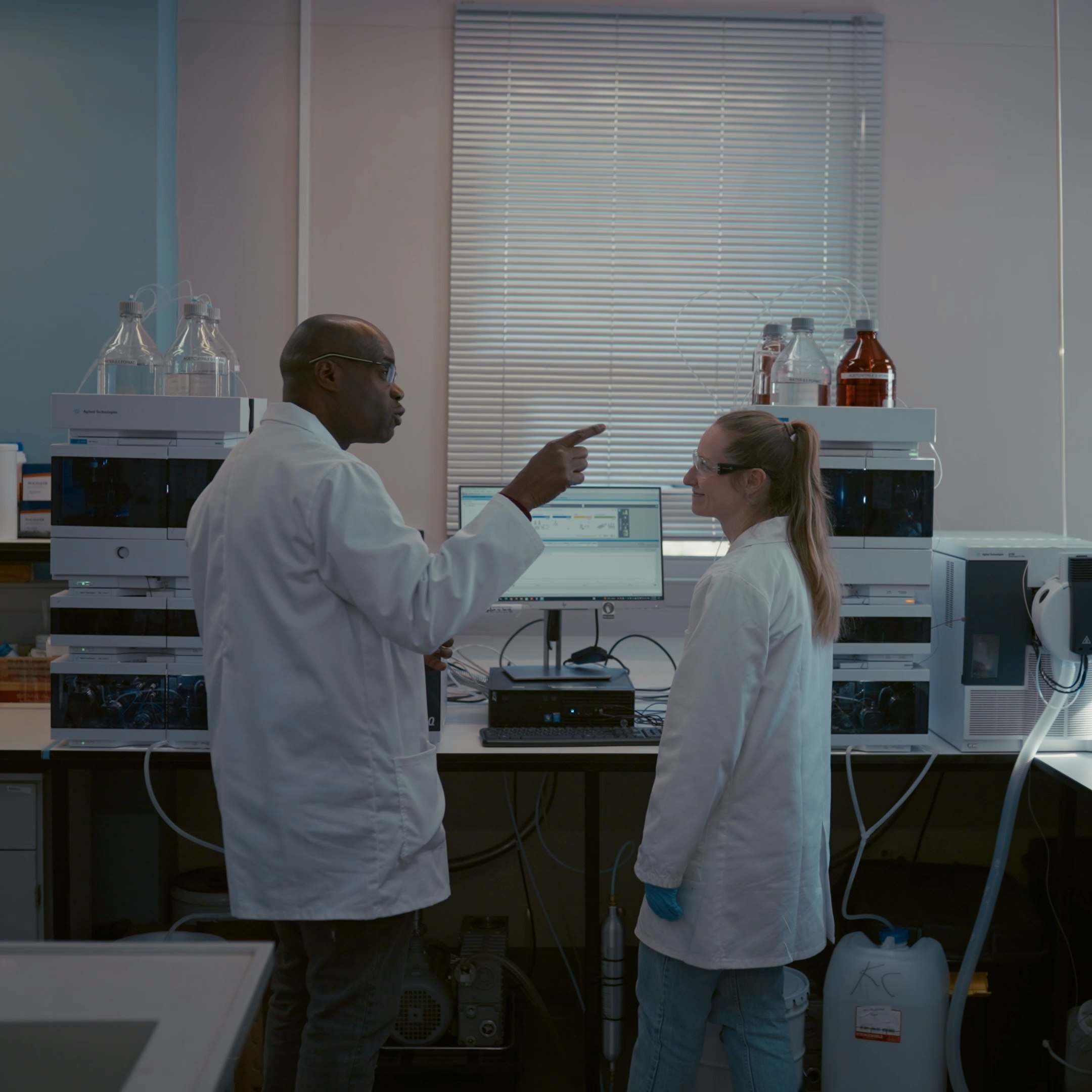
This program aims to fund joint teams of experimentalists and computationalists to ensure that developed models are grounded in physical reality and fit for laboratory use. We are focused on field stewardship that establishes lab-actionable error thresholds—transforming modeling from a tool for retrospective explanation into a trusted engine for discovery.
Check back at a later date for funding opportunities in 2026. Inquiries should be directed to [email protected].
Opportunities for Funding
-
Apply
2026 AI for Actionable Matter Modeling
AI for Actionable Matter Modeling